Thursday, November 9, 2017

UPDATE: VOR - MINI TRANSAT -TRANSAT JACQUES VABRE


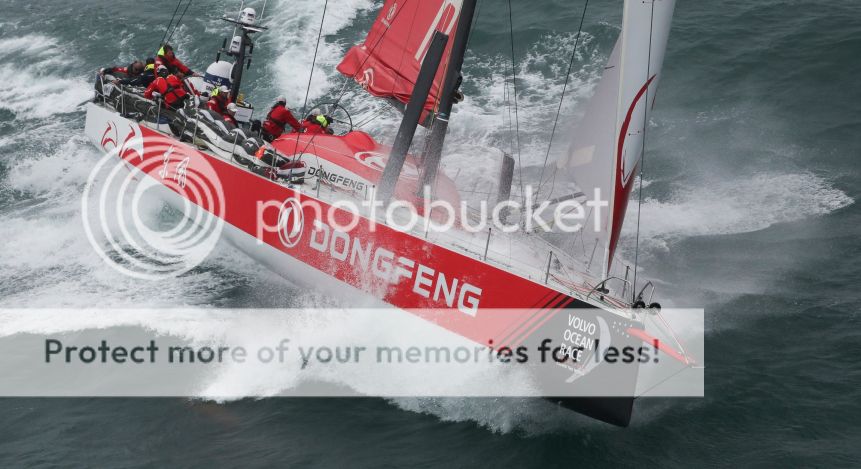
Starting with the Volvo Ocean Race with this incredible movie: that's what I call sailing a bit over the limit LOL. The race has been interesting with 5 boats inside 13nm, even if all the boats have been following about the same routing and that is a bit boring.

Maybe now that they are arriving to the doldrums they will opt for different approaches. Not surprisingly Dongfeng has been a bit better than the others and with a bold move to the west won  a lot of miles to everybody and is now leading, with a 5nm advance. All are following now its routing. Maybe if he can keep the distance the others are forced to look at different routing options?
http://www.volvooceanrace.com/en/dashboard.html


On the Transat Jacques Vabre the 4 different races are very interesting. I will start with the smaller boats, the 40 class racers, with a video from the ones that are 2nd now (they were 3rd when the movie was made). The leading boats have been going at an amazing speed, for 40ft boats. The first passed the heavy weather with the foot down. They are making close to 340nm a day and that is IMOCA (Open 60's) territory.  At that speed no wonder that Phil Sharp/Pablo Santurde (the leaders) have overtaken the last of the IMOCA and are not far from others. Quite incredible!!!


On the Imoca (open 60's) the fight has been fierce and those on the video, even going at that speed, are only 5th, at 111nm from the first boat crewed by Jean-Pierre Dick/Yann Elies, but because among the first there are many different routing options, the distance between them has not the same meaning as if they had all gone for the same routing, like on the Volvo. Here, due to different routing options it is easy to win or lose many miles.

On the video above Lagraviere/Peron, that are 3rd, are experiencing some heavy weather. They are the ones more to the East, with many miles of lateral separation from Dick/Elies but I don't think it is going to be a good option. It seems that the way to go is all to the west. We will see and that is half the fun of it, trying to understand routing and the different options and seeing the results.


The fastest Imocas have been able to sail at about the same speed of the Multi50 and only on the last day the two fastest Multi 50 went away. And went away because they have been on an huge fight and are sailing really on the limit. They have exchanged positions several time and it is one of the hottest fights on this transat. First now is Roucayrol/Pella (on the video) but Leroux/Riou are at only 12nm and much more to the West. I would say that they are going to be much closer tomorrow.

On the Ultime class there are only 3 boats and one of them has already been overtaken by the two Multi 50 and also by the fastest IMOCA. They probably have problems but the other two are batlling hard and going very fast. For most of the race Josse/Rouxel led but some days ago Coville Nelias, going much more to the West were able to overtake them. Since then, on about the same routing, Josse/Rouxel have being able to recover, bit by bit and are now at 42nm. They are now the ones more to the West and they are approaching the Doldrums where routing is paramount and where many miles can be won or lost. Great races going on on this Transat!
https://www.transatjacquesvabre.org/fr/cartographie-et-classement


And at last the Mini Transat that is far from being the less interesting race, even if on the Proto class (Prototypes) Ian Lipinsky, that has won already the first leg (video above) went away and has a big advantage over everybody (over 100nm). Riechers, the 3rd, has made a bold routing move, going all to the South. I think he has a good probability of being successful but not to the point to catch Ian. Another story is catching the 2nd, Kostner, and regarding that I believe it is going to be a very interesting fight.

But in what regards fights the one that has been great on this race is the one for the leadership on the serie class (production) where Clarisse keeps on pursuing Erwan even if she has been losing some miles. For catching him she needs to outclass him in routing. We will see what she can do about that. Both are making a fantastic race and are among the first Protos!!!
http://www.minitransat.fr/en/follow-race/cartography

And just to remember that these little 22ft boats can reach fantastic speeds, a look at an already old movie, but still a favorite of mine:


Sunday, November 5, 2017

2017 MIDDLE SEA RACE: THE MOVIES


For a race where almost two thirds of the participants had to retire I would have expected a lot more interesting movies but I guess that they were too occupied to make them LOL. Also a pity not having, as in past years, an extensive air coverage, right on the storm. I guess we will have to be satisfied with what we have and it is not bad at all: probably one of the most beautiful sailing movies ever (racing highlights) not only in what concerns the race but in what regards the scenery. Truly beautiful.

Friday, November 3, 2017

HULL DESIGN/PERFORMANCE: JBOATS VERSUS JPK, FIRST AND POGO.


I will be using the results of the last Fastnet to do that comparison. As everybody knows the Fastnet is one of the main European races and probably the one where we find better teams and more modern boats. They are not more because the entries are limited so it tends to reunite the cream.

JNA39
The race is an offshore one, goes from Cowes (England), around the Fastnet rock (Ireland) and finishes in Plymouth (England). Due to its course it has always varied winds. This year's edition they had light winds, medium-strong winds, and as expected, lots of downwind and upwind sailing. A great place to look at the comparative performance of modern performance cruisers, or cruiser racers.

Archambault 13
I will disregard carbon pure racers and I will be focusing at the performance of modern affordable dual purpose boats with different types of hulls. Lots of them on this race: light boats based on open solo racers like Pogo or RM, with a huge beam and the max beam pulled to the transom, main IRC type designs, heavier boats with a moderate beam and the beam not so much pulled back, like the First, boats with a smaller beam and the beam even less pulled back like the Jboats and French modern designs, with a moderate beam but with the beam pulled back like the JPK or the Sunfast.
j122

I will be looking at real times (not compensated ones) and of course you will have to give allowances in what regards the boat length. Length for length you can compare directly but not when boats have different sizes. Some will say that sail area or displacement are also important but I don't care, for me the length is what matters most and eventually price, but we will not be looking at prices on this post. I will be looking only at boats with a length smaller than 46ft.  Bigger boats are not many and not enough to provide significant data.

Let's look at the real stuff, the real-time the boats took to complete the race and let just focus on the boats that have made it in less than 4 days and 10 hours. A big disadvantage for the smaller boats, that proportionally for the same performance versus length should be allowed more time, but we have to set some limit. It is unfair for the little ones, but would allow us to see better how they compare, speed for speed with bigger boats.

Among these boats the fastest was an Archambault 13 that made the race in 3 days 13 hours 41 minutes and 08s (3 - 13:41:08), the next fastest was a JNA 39, the one on the big photo above. The JNA is a relatively new design from Joubert&Nivelt  and it could be the new 39 from Archambault, if the shipyard had not gone bankrupt, since Joubert&Nivelt were the ones that designed their boats.

The JNA39, a much smaller boat was a blast making the race in only more 7 minutes  (3 - 13:47:59), truly amazing and no wonder that they have won the Fastnet (in compensated), family crew and all.
P12.50SF3600JPK1080XP38J122

The first Jboat was a J133 (3 - 17:33:05) took almost more 4 hours than the much smaller JNA 39 followed closely by an Arcona 465 ( 3 - 18:05:04) a Grand Soleil 43 (3 - 18:07:59), a First 44.7 (3 - 18:09:56) an Azuree 46 (3 - 18:48:40) another First, a 40 (3 - 19:55:18) closely followed by a Swan 42 club (3 - 20:01:20) a XP44 (3 - 20:12:28), a X41 (3 - 20:54:24) and a Grand Soleil 43 (4 - 03:25:03).

The next was a new J122e (4 - 00:57:34) that being slightly bigger than the JNA 39 took about 11 hours more and was beaten by the First 40 by 5 hours. Then a J133 (4 - 01:41:45), another J122 (4 - 02:27:54) and only one hour later came a  much smaller JPK 1080 (4 - 03:10:22) followed by two J122 (4 - 03:26:57) J122(4 - 03:32:42) another JPK 1080 (4 - 03:43:35), a X41 (4 - 04:11:29) and another two JPK 1080 (4 - 04:11:58) JPK1080 (4 - 04:28:07).

X133
Then a First 40 (4 - 04:31:13), a  Sunfast 3600 (4 - 04:36:56), a J122e (4 - 04:37:41), an Archambault 35 (4 - 04:38:45), a Sunfast 3600 (4 - 04:39:04) an X40 (4 - 04:45:21), a Sunfast 3600 ( 4 - 05:21:56) another X40 (4 - 05:22:41) a JPK1080 and only 3 hours later the 2nd J122 came a small JPK, a 1010 (4 - 05:33:52) with a duo crew, father and son, the ones that some years back won the Fastnet and that this year won the duo crew category and also its IRC class. What a boat, what a family!!!!

JPK1080
Then another JPK 1080 (4 - 05:38:50) a First 40 (4 - 07:08:42) an A35 (4 - 07:34:45) a X41(4 - 07:52:09) a First 40 (4 - 08:44:07) a JPK1010 (4 - 09:01:52) a J109 (4 - 09:21:35) a First40 (4 -09:50:05) a J120 (4 - 09:54:00) and a JPK 1010 (4 - 09:55:00) .........Pogo1250 (4 - 13:05:45) Pogo12.50 (4 - 12:26:17) Pogo2 Class40 (4 - 13:16:27) RM 1270 (4 - 17:46:43).

For obvious reasons I had to consider the results from the Pogo out of the 4 days 10 hours limit because none of them finished inside that time. Between the last sailboat that made it on the time I considered as limit and the Pogo, many boats of similar size, and smaller, made a better time.

Pogo 12.50
Another interesting consideration regards the huge number of Jboats racing (40) probably the brand with more boats racing, being the smaller the J105. Among the boats that made it on the considered period (fastest cruiser racers) there is only one Jboats smaller than 40ft, while we can find between Archambault, JPK and Sunfast 10 sailboats considerably smaller than 40ft, some much smaller like the three JPK1010 (33ft). There were two fast J111 racing but none was able to make the race inside this time period.

First 40
So what does this tell us about hull type and performance? The main traditional development line of IRC boats (First, Grand Soleil, Swan) performed very well, even better, the "French" type of boats with a similar beam but with a larger transom due to beam pulled aft (JNA 39, Archambault, JPK, Sunfast Azuree), not so well the Jboats, that are narrower boats with a max beam not pulled back and not good at all the very beamy boats with hull derived from solo racers (Pogo, RM).
JPK 1010 and J111

On another race, with more upwind sailing and nasty seas ot with very light wind, the Jboats could have made comparatively better. On a predominantly upwind race the J would probably be the fastest, on a predominantly downwind race, like a Transat, we would see the Pogos shining and the "French" type of hulls doing even better regarding Jboats and traditional IRC racers (First, GS, XP). 

The point here is that there are not miracles and each type of hull has strong and weak points. But I would say that the type that seem to have a  better overall balance between upwind and downwind performance is what I called the "French" line of development that includes for instance the GS 34 and the Diva 34 (recent posts), none of them French boats.

Besides the French I would say that I am not the only one to think that this is the best compromise and more and more performance cruisers are designed that way. This type of hull offers also the advantage to be easier to sail downwind solo and most of all to be more stable and easy on autopilot and that is not a negligible advantage on a cruising boat, being it a performance boat or not.

Sunday, October 29, 2017

GRAND SOLEIL 34, SOMETHING DIFFERENT...AND VERY NICE


More than a lovely boat the GS34 is for Grand Soleil a return to its origins. They are now making more and more expensive boats, luxury fast boats and luxury main market cruisers but their origins lay on small and not very expensive cruiser racers, fast boats that were used for racing and cruising.
Grand Soleil success history started 45 years ago with a 34ft boat designed by Finot, a great little boat, good on the racing field and on the cruising grounds. It was not made only in Italy but also in Japan (under license) and more than 300 boats were built during 11 years.

The new GS34 aims to be a modern version of the same concept: “The project is aimed at owners who love fun, sportive cruising and offshore racing, and was inspired by the open ocean boats. Great attention was put in the design and naval architecture process in order to create an offshore racing boat that is easy to sail at maximum performance but at the same time a very comfortable fast cruiser”. 

When they talk about the GS34 being inspired by open racing boats we would think of other fast boats that come directly from that line of development, namely Pogo, the ones that are truly inspired by that concept, but this hull is very different sharing with those boats mostly the transom design, with all the beam pulled back, but that happens with many other types of racing boats, for instance the TP52, that would be a better reference in what regards inspiration.

Just to make clear to you the difference, a Pogo 30 has 3.7m beam, a Pogo 36 has 4m and the GS 34 has a beam of only 3.6m. The hull is close to the one of a JPK 1080 or a Sunfast 3600, not close to the ones of open solo racers (like Pogo is).

This is a very different type of hull and while Pogos are maximized for downwind sailing this one, like the Sunfast or the JPK , is a much more balanced boat in what regards the upwind/downwind compromise. This is a boat that aims to win the Transquadra but also one that will be successful on the Middle sea race, on the Fastnet or even on the Sydney Hobart (like the JPK 1080 was) and that will be competitive on traditional coastal regattas.

It is also a boat that being able to perform well while racing is also a nice boat for cruising, having a modern and very nice interior, much better than the one on the Sunfast. It is as good as the one of JPK even if with a more contemporary design, a very nice design, I would say.

Regarding this size, the JPK 1080 is the best performing sailing boat with this type of hulls (in what regards racing). So let’s compare it with the GS 34 to see the similarities and the differences (first the dimensions from the JPK, in meters and kg) ): LOA – 10.80/10.70; LWL Beam – 3.64/3.60; Draft – 2.20/2.18; B/D (with same type of keel) – 45.3%/44.9%; Displacement – 4750/4900; Sail area upwind – 73/ 71; Sail area downwind – 160/150.

Two very similar sailboats, the JPK being slightly more powerful. The JPK is designed by a very experienced and successful French designer, Jacques Valer an autodidact that designs all JPK. Valer designs have won almost everything that there was to be won. The GS 34 is designed by a team (Skyros), fresh from Spezia, the Italian School of naval design (Genova) with limited but innovative design experience, mainly on a Mini racer. 

Nice to see a big company betting on an innovative but inexperienced team composed by very young NAs, some of them very good sailors! I really hope this design turns out really well on the racing field. New blood on boat design is always a desirable thing.

Both boats are very well built using vinylester resins and a sandwich foam core but while GS uses a structural matrix that includes the basic “furniture”, laminated to the hull, the JPK uses vacuum infusion and the boat structure is not laminated but part of the hull. The superior built technology of the JPK probably explains why the boat weights 150kg less and I bet it is not less strong, probably more.

The two have IRC maximized keels, meaning lead keels without a bulb and both can have, if the client wishes so, torpedo keels. It is sad that the IRC still gives advantage to less efficient keels while this is already solved on ORC rating, where torpedo keels are the norm.

The GS34 looks just great and I believe it will be a success, or not, mostly depending on the price. In regarding fast cruising there would not be any significant difference between the two boats, except in what regards the interior, that have a different style.

Regarding prices I suppose, that like on JPK, they will vary hugely depending whether the boat is intended to race on top races (and win) or if it is just a fast cruising version or something in-between. A JPK can go from a bit over 164 000 euro to close to 300 000, depending on sail wardrobe and equipment. A basic GS 34 would cost about 139 000 euro, all prices without VAT.

In what price is concerned the comparison between the two boats, with the data I have,  it is not really possible to make, since it will be depending on the equipment each boat has for a given price, but at a first look they seem not to  have a very different price.... and the GS 34 should cost less than the JPK. I have some doubts if in what regards price and concept a comparison can be made with the original old GS 34, that was not an expensive boat.
That price is about the same as for instance the one of an Oceanis 38 and it shows why main market cruiser boats are built the way they are, including a very basic sail hardware: If they would be built like these two, they would cost a fortune. 

It explains also why Beneteau has finished (at least for now) with the First line that was on the origin of its proper existence: the built is too expensive for a boat with a considerable share of the market.

 There are not enough cruisers liking sportive sailing while cruising to generate a decent profit for a boat built in large numbers, the racing market is too small and has the competition of faster small series boats. A  pity! Praise to Hanse, the only one among the big mass production builders that maintain a line of fast cruisers, the Dehler line…even if I doubt that for much longer (I hope not).


Monday, October 23, 2017

NASTY WEATHER ON THE 2017 MIDDLE SEA RACE


The Middle Sea Race is my favorite med race for several reasons, one of them being the variable conditions the boats are subject to, very typical in what regards the med conditions. Being raced at the end of October gives it the probability of having some nasty weather and that happened before on a number of occasions and also this year.

On the first phase of the leg, from Malta to the Messina strait, they got very light upwind winds to the point that they struggled to pass the strait, going against the current, making in most cases 2 or 3k. Then on the second phase, in the North coast of Sicily they got 33k winds gusting 45. On the West coast of Sicily they had on the beam 25k gusting 35k and finally going to Malta they had again winds over 30, gusting 40k or more.
 
Going against the wind here with 4 to 5 meters waves is not the same thing as on the Atlantic where that does not pose any particular difficulty. On the med the waves are much steeper and with a shorter period. Very nasty to say the least and difficult, a lot of power needed to make way. 


So you get the picture, great race to see how different types of hulls behave on different conditions and on this race, besides pure racing boats there are a huge number of recent performance cruisers racing, among them a Pogo 50, several Xp44, several J122, 2 JPK 1080, a Sunfast 3600, a First 45 a Salona 41 and many other recent production boats. 

Of course many of them threw the towel, given the conditions, but we can take lots of information regarding the performance of those boats. Starting with the race boats, great race from Hugo Boss, a Imoca 60ft boat, designed for solo sailing and maximized for downwind sailing that proved here that is not so bad upwind (amazing), losing just a bit, having to go to a higher latitude before coming down but then faster than anybody else, including Rambler, catching and overtaking the Maxi racer CQS (98ft) and closing on Leopard, another Maxi racer (100ft).


Near Pantelleria Island Hugo Boss was just on Leopard’s tail but then the different sails, asymmetric Spinnaker on Hugo Boss and symmetric on Leopard allowed the last one to sail at a higher wind angle downwind and therefore make better way. Anyway, great race for Hugo Boss that sails in third place (in real time). It may not be maximized to sail upwind but it is certainly maximized to sail in strong winds and the conditions on the last part of the race have suit it well. Right now is the fastest on the fleet, Rambler included.


Among the racing boats the other one that really is impressing me is a little 35ft, that even on these conditions is 10th on the fleet, a boat from the other side of the world (NZ), Crusader an Elliot 35. What a race!!! What a boat!!!

On the group ahead of that little racer there are other boats making a great race, namely Caro, a very special (and beautiful) 65fter, the first of the cruiser racers, sailing in 5th place, a Botin design made by Knierim.
Next, at about the same distance Caro is from CQS, come two racers, an older one, a Cookson 50, Kukka 3 and a 46ft state of the art racer featuring DSS, Maverick, a Infiniti 46R designed by Hugh Welbourn, the father of DSS.


You can follow the race here: http://www.rolexmiddlesearace.com/tracker/#pt
Rambler has arrived, all the others are still racing. I will leave for tomorrow the post about production boats, the ones I find more interesting.

Sunday, October 22, 2017

VOR 2017, A VERY INTERESTING 2nd RATE RACE


Ok, the title is provocative and expresses my disillusion with what has become this race; 2nd rate why? A first rate race is raced with state of the art machines and with the best racers in the world. We can take a parallel with the F1 when last year cars are outdated and not competitive and where all pilots, even the slowest are the best in car racing and are really the cream among top pilots.

The VOR is raced on monotypes that are far from being state of the art, designed by the loser (among NA) of the last edition raced with prototypes and the boats are slower than the fastest VOR of that edition, 7 years ago!!!

Among the sailors that race the VOR there are some top racers but the majority are far from being the best world’s offshore sailors and we reached a point where the rules are bended allowing an advantage in having women instead of men. Top racing is done with the best of the best, being them men or women, not giving some advantage in having women among the crew.

The race started and started well with many showing a big surprise (even among the TV commentators) for the Chinese  boat being ahead. Don’t understand why, they have by far the best crew and even if not all top sailors they have 4 of them, including the skipper more three good ones (including a woman) and only two less competitive sailors. Sure, Mapfre won the in port race but the Chinese team was close behind, after some mistakes and a good recovery.

If the best team has only 4 top offshore sailors and the others have less how can we call this a 1st rate race? Compare with the Vendee globe where almost all top solo offshore sailors are there and the boats are state of the art to the point of making impossible a last edition boat to win the race. Put the Groupama, the VOR that won two editions ago, competing on this VOR edition and he would win the race!!! So much for the state of the art sailboats!

Another ridiculous thing about this race is the boat nationalities, for instance they say: “Team AkzoNobel is a brand-new Dutch ocean racing team....continuing the remarkable legacy of Dutch teams competing in the race.” and they only have a Dutch among the crew !!!! A long way from the whitebread spirit where nations felt that they had boats representing them.

There is even a boat from the United Nations! Or an American/Danish boat without any Dane on it! If we consider (as it would be normal) that a boat to represent a country has to have at least the skipper plus more than half the crew from that country only Mapfre qualifies itself as representing a nation: Spain.

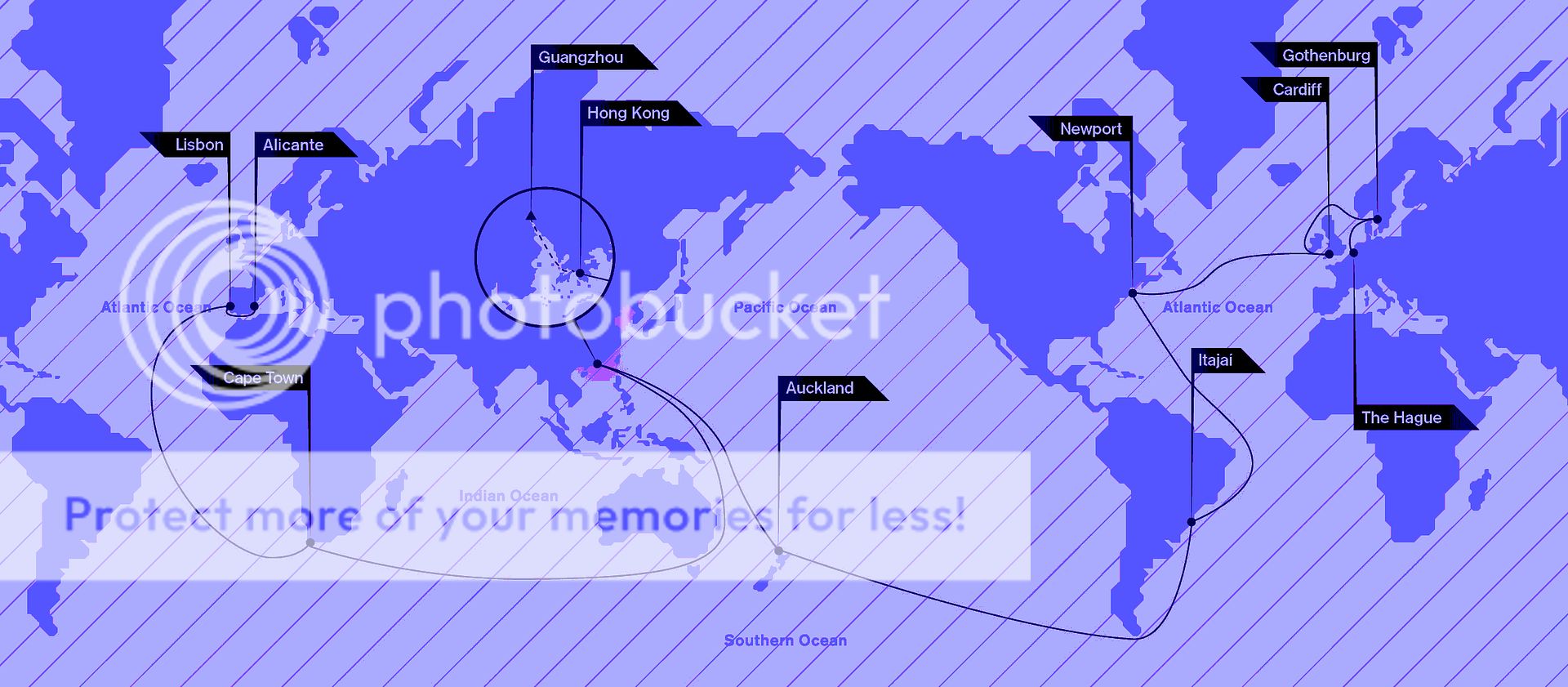
About this race: great start with the “Chinese” team showing already supremacy and with Mapfre showing that it can put a good fight and win some in port races or even legs. Or maybe I am wrong and the Spanish can fight in equal terms. You can follow this race, now on its first leg between Alicante and Lisboa here:


Thursday, October 19, 2017

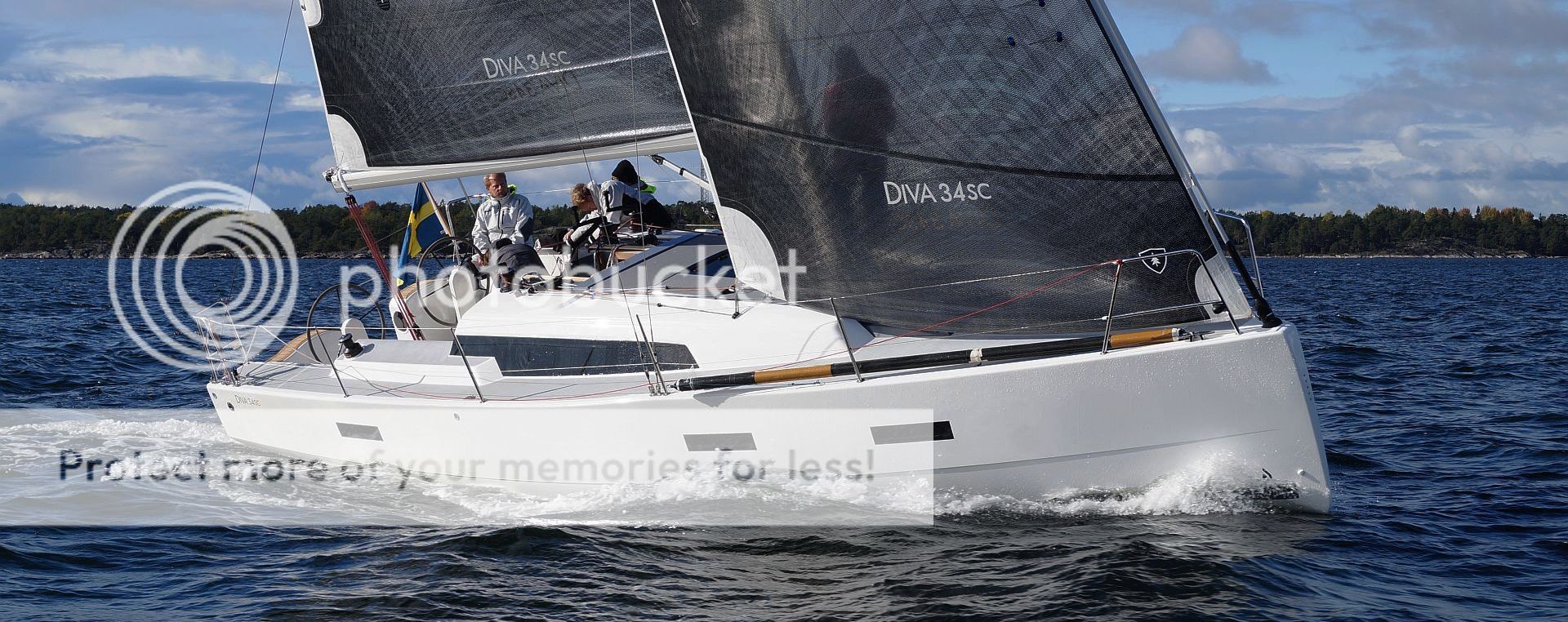
DIVA 34SC WHAT A BEAUTY!


I had already posted about this boat when it was just a project. I called it a gorgeous design. Well it has become a gorgeous sailboat! Not all projects turn out so well in what regards reality:

http://interestingsailboats.blogspot.pt/2016/10/diva-34sc-gorgeous-little-boat.html

For many the name Diva means nothing but it is one of the oldest Swedish yacht brands, made by Fabola Shipyard, that has been making beautiful yachts for the last six decades.
I will not repeat here what I said on the previous post (link above) that has important information to understand why this boat is so special (light and strong) and not only beautiful.

The Diva 34SC has been tested by several boat magazines from the North of Europe and Germany and all have been impressed with the boat, with the way it sails, with the quality of finish and even with the price (147 000 euros), not excessive for a boat with this built quality and finish.

To understand better the enthusiasm that this boat is raising, some quotes from magazine boat testers: on the German "Yacht de" they say - "An extremely exciting combination, which was also convincing in the test run in the Swedish archipelago" and on the Norwegian "Seil" - "Bernt "Lindquist has found the right mix...many have tried to create a combination of cruising boat and regatta boat but few have been so successful.."

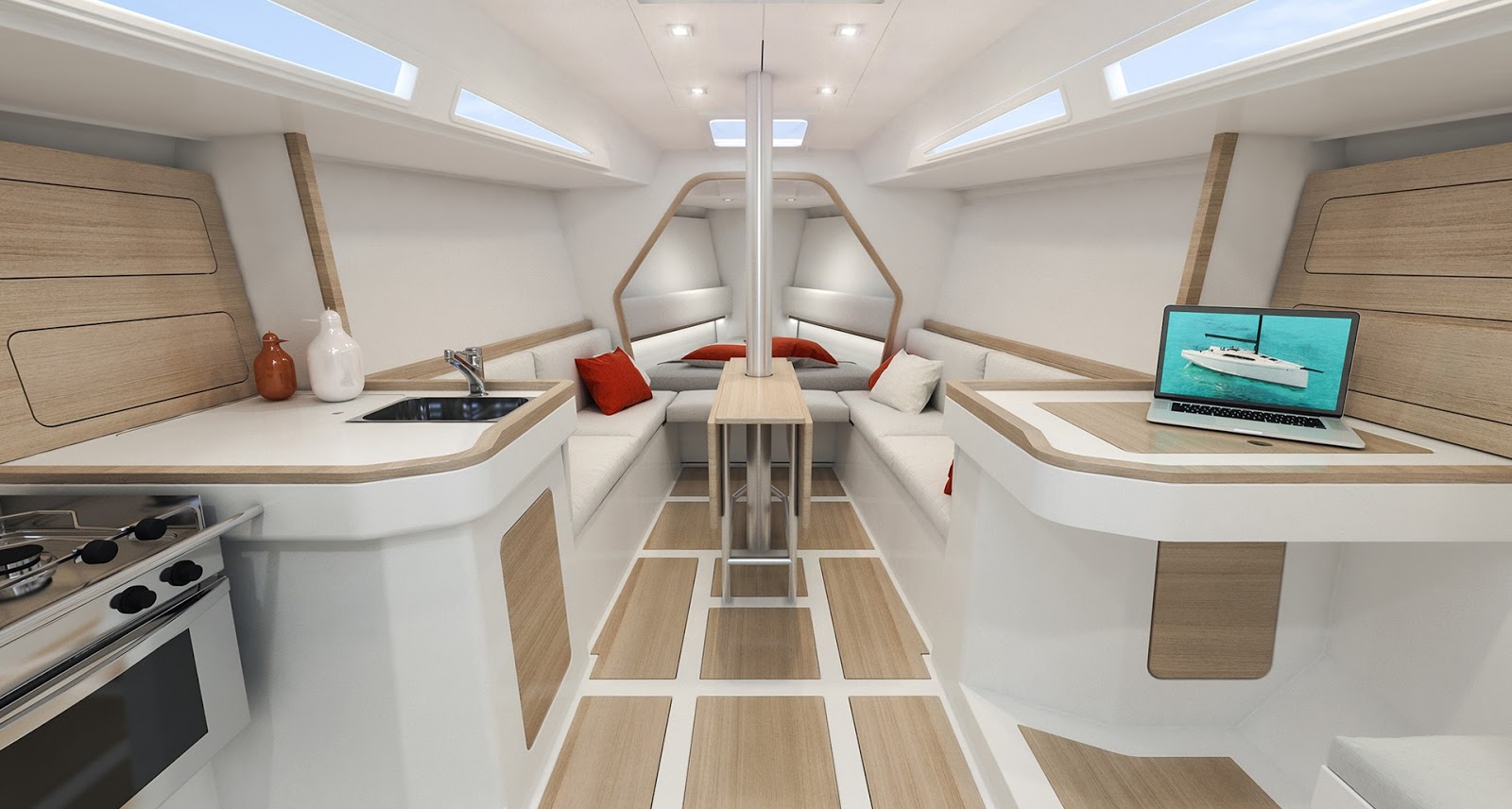
Fabola shipyard deserves congratulations as well as its designer, Bernt Linquist, that is designing Diva yachts for the last 34 years and has succeeded in keeping updated regarding contemporary boat design, I mean state of the art. The 34SC is about 1000kg lighter and stiffer than most performance cruisers of that size. It has also a surprisingly big interior due to the integration of the chart table on the saloon table.

The table is very well designed, with space for maps, opening like all chart tables and the innovation doesn't stop here and extends itself to the galley that has a design that is mostly used on bigger cruisers, subdivided in two blocks allowing a good body support no matter the tack the boat is sailing.

Also on the version with two cabins and a storage space, the one that makes more sense, they found a way to have a separate shower!!!

The Diva is beautiful with only a transom that looks a bit odd, not an open one neither a closed one, but probably that is just on the prototype since we can see on the drawings that a big swimming platform will close that transom when it is raised. I am quite sure it will look a lot better that way.

I really hope this boat will have the success it deserves. The problem regarding sales has to do with the size of the sectorial market that points to the ones that like as much sailing as cruising and are willing to pay more for a better and more enjoyable sailboat, not a big one unfortunately. A pity for all that like elegant well built and fast boats.