Friday, January 13, 2023

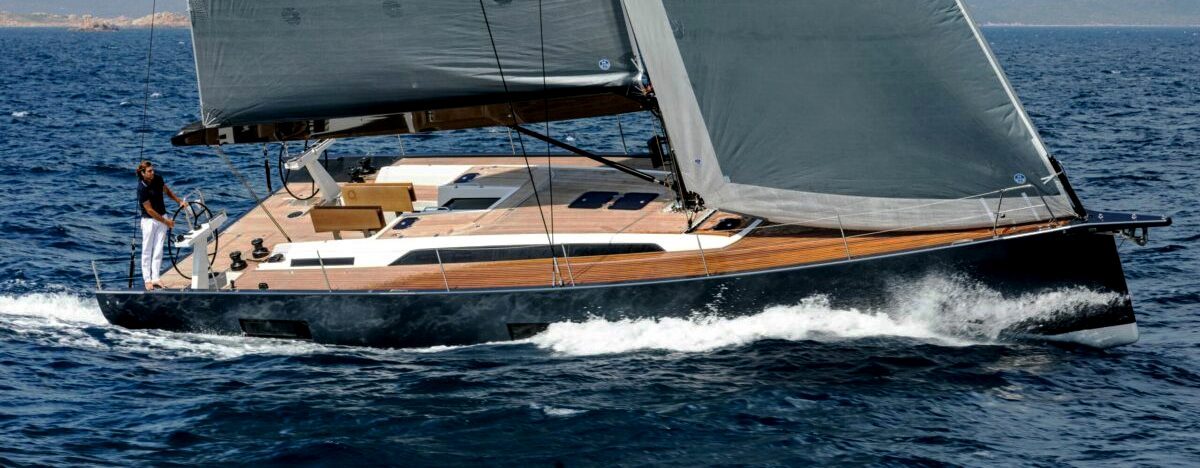
FROM AN OLD YARD, A BEAUTIFUL CRUISER: CR 490DS


Many have never heard of CR yachts but, in fact, it is a prestigious old brand that was founded in 1989 by Charles Rutgersson. Before that, he had worked for 15 years for Hallberg Rassy. But the history of the shipyard is much older, CR are now built in the Malo yard. Malo yachts (and yard) was founded in 1939, in Kungsviken, on the historic island of Orust (Sweeden), famous for its century-old boat-building history.

Now CR yachts are managed by Charles's son, Mattias Rutgersson, and not only CR but Sweden yacht group, which reunites several old and very prestigious high-quality brands, that continue to be built also in the shipyard, namely Sweden Yachts, Malo Yachts, and Regina Yachts.

Sweden Yachts, founded in 1976, is a brand of high-quality performance cruisers, and today, because the line has not been actualized for years, produces beautiful slightly outdated yachts, that have become classics, and are still fast as performance cruisers, even by today's parameters.
                                                                                     https://swedenyachtsgroup.se/

Malo and Najad, were for many years the two main Hallberg-Rassy contenders, fighting for the same market, and there was a time when Malo was, from the three, the one that had a slightly more modern design. But Hallberg-Rassy moved on, while Malo did not modernize its range, that today is constituted by older designs, solid luxurious and seaworthy, but outdated.

Regina is an old brand of Deck-saloon boats. The yachts are heavy, seaworthy, and old design with the most luxurious interior and finish that I have ever seen in a sailboat. Today the designs seem even older, but the interior quality and the conservative interior design, are as good as it ever was.

CR was, of the four, the one that produced more modern boats, they produced aft cockpit sailboats and deck-saloons, even if the more popular were the deck-saloons, which are fast and seaworthy boats, considering the type. I remember that when Arcona produced deck saloons the CR could match their quality and speed, offering a better-finished interior (at a bigger price).

Their best seller was for many years the 400 DS, but more than 20 years after its launch the boat is outdated and its successor, the 410, did not look much more modern. But things changed radically in the yard with the introduction of the new CR 490DS, designed by Ben Rogerson, a young talented NA, and the design looks not only modern but gorgeous. 

Without sacrificing any of the values that made the 400DS famous, like sailing ability, quality and seaworthiness, the 490 offers the same typology: a true deck saloon, offering a panoramic view when seated in the salon, and a true interior pilot station (with joystick), one that offers very good visibility all around.

The proposed interiors look great to me, particularly the one with a dinghy garage, that I would turn into a 2 cabin boat, with the smaller aft cabin turned into a technical and storage space.

They don't give the HL and it seems to me that the LOA (15.50m) includes the bowsprit with an anchor stand. The LWL (13.82m) indicates that the HL should be near the 49ft mark (14.9m). 

The beam is big (4.71m) but not as big as in a Hallberg Rassy 50 (5.01m), and the bow entry lines are narrow and for that reason the forward cabin has a sail locker ahead, to allow a good width in the forward part of the cabin.
I like the hull shape that without having anything particularly remarkable provides a lot of hull form stability, but also allows a good performance upwind. The standard keel, which seems to be a traditional bulbed lead one, has a relatively shallow draft (2.25m). and they announce 6500kg ballast for a 17600kg displacement (36.9% B/D). That will provide an AVS over 120ยบ, good final stability, and small inverted stability, as well as a good stiffness to sail in more demanding conditions.

The standard keel can be substituted as an option by a modern hydraulic swing keel, that extended has a 3.30m draft, and 1.10 m when up. That keel, besides convenience (if they give the same RM to the boat), will offer not only better upwind performance as well as a lighter and faster sailboat, because the keel will need less ballast, for the same GZ stability curve.

The hull has a two-rudder setup that will provide additional safety and reliability, in case of a broken rudder, and also much more convenience while med mooring to a quay, where the smaller rudder drafts would be much appreciated, being most of the time the depth at the quay considerable less than the depth at the keel area. 

The inconvenience of the two-rudder setup is smaller maneuverability at the marina, but boats of this size are today always equipped with a bow thruster, and this one has one as standard equipment,  and that will solve almost any problem.

With a rig offering optionally two fixed sails on stays, a jib on a self-taking traveler and a genoa (in a Solent rig) it will allow a lot of flexibility, and easy sailing with a small crew. Personally to sail the boat solo or with a small crew I would prefer a bigger 135% genoa, dispensing the big gennaker (160m2) that is never easy to be set and controlled by a single sailor, especially if it is well over  50 years of age, the average age of CR yacht clients.

The CR490DS has a relatively small SA/D with the small genoa, and even smaller with the auto-taking jib (17.6 and 18.8) and that is why if I had the boat I would want a bigger 135% genoa, which would give it a 21.8 SA/D and would make it a faster boat.

Sure, you can have the original set-up and have a Code 0, but like the gennaker, it is not easy to mount, launch and control for a single sailor and many of these boats even if sailed by a couple are in fact almost solo sailed and using it out of very light winds is complicated. Many times light winds are changeable in direction, and that makes the use of that sail hardworking and not rewarding. 

In fact most cruisers I know that sail in a couple, rarely use that kind of sail, especially if they sail big fast-performance cruisers, where those sails are huge. That does not mean that one has not a gennaker (I have one) but that considering it (or a code 0) as the main solution (with a small jib) does not make much sense if the boat is over 38ft (I use the gennaker maybe three or four times a year).

Modifying the rig for a 135% genoa should not be a problem in a semi-custom boat, and all that is needed (besides the sail) is a longer genoa rail. Another thing I really don't like is the winch at the mast, which is an outdated solution, being today all manoeuvers done in the cockpit. I would have preferred a different rigging with two more winches.

Maybe two winches can be mounted over the cabin, serving for controlling, the reefing system, and the main sail halyard, as well as the boom-topping lift and the cunningham, with the four aft winches controlling the forward sails (including a gennaker) and the boom traveler. 

I also don't like the small space between the wheel and the seat, as well as the small space to be seated on the side (due to the seat), while steering, but that can be easily solved with the removal of the two seats behind the wheels.

The ones that will want the boat for crossing oceans will be concerned with the relatively big window surfaces (that are smaller than in other boats that are not even true deck saloons), and I can only hope the CRs are built by the son the same way they were built by the father. 20 years ago I remember having a talk about the big windows with Charles Rutgersson, and I was impressed with the care and work they had to warrant the solidity of those glass surfaces, and also remember Charles complaining about the price it cost doing it the right way. 

He mentioned the price to me, I don't remember exactly, but it was a very substantial amount of money, one that I did not imagine possible. I don't know if they still do it the same way. The problem is not the glass, which is almost bulletproof and double (for isolation), but the way the frames are secured to the fiberglass and the strength of the frames.

Sure, they have decades of experience in what regards that, but it also seems to me that they are trying to lower the price of this boat as much as possible, and as a negative point they do not use vinylester or epoxy resins resin in the sandwich composites, but ISO polyester resins, that do not offer the same no-water-absorption, but, even so, offer better mechanical resistance than other polyester resins.

They don't also use contemporary techniques like vacuum infusion, which, if well made, allows for lighter sailboats, but hand-laid glass. Of course, one or the other technique can result in very different quality hulls, depending on how well it is done, and before thinking that the CR building has a low-quality boat building, it is good to remember that Hallberg Rassy hulls are built the same way, with a  foam sandwich, hand-laid glass, and good quality polyester resins.

The CR490DS offers a big water and fuel tankage (600 and 400L) and a big 80hp engine, and it comes standard with many pieces of equipment that are optional in most sailboats, like a sprayhood, diesel heating, electric WC pumps, water-cooled fridge, boiler and hot water, bow thruster, Pentex sails, epoxy hull protection, anti-fouling and with all needed electronics including autopilot.
All that would make it difficult to compare in price with other cruisers that don't come standard ready to sail, and you would have to join to the standard price all the expensive equipment, that anyway is needed, that comes already standard in this boat. The price without VAT will be about 835 700 euros, expensive, as all high-quality boats, especially the ones built in Sweden, but even so much less expensive than a Hallberg- Rassy that costs well over a million euros.

All in all, a very interesting sailboat, one that continues the almost extinct deck-saloon typology while almost all boats of this size (and bigger) that use that denomination, or outside visual outlook, are in reality not deck-saloons, but boats that use the higher cabin and big windows to have an interior with more light, and a huge interior height, giving a house like sensation in what regards space.

A boat that I will follow closely and that I hope becomes a success, a well-deserved one: CR yachts have been building high-quality yachts for many years, never having abandoned the deck-saloon concept (with a pilot station) for a house volume interior (as so many others), and now dares to offer to a very conservative clientele, a modern designed cruiser, and for that matter, a beautiful one.

Saturday, January 7, 2023

SHOGUN 43, A DREAM BOAT

Dreamboats are not the same for all sailors, and what is a dream for one, just does not make any sense to another, depending on their requirements for the ideal cruising sailboat. Most will value cruising amenities and interior volume over sail ability and sail fun. For those, this will not be a dreamboat and they will have difficulty understanding how this can be a dream sailboat for anybody, except a racer.

And then there are the few to whom this boat offers enough cruising amenities for a couple, with a spare cabin to be used occasionally by guests, and another for storage and being satisfied that requirement, all priorities go to having fun while sailing, to performance, and to beauty, the one that kind of makes you proud of owning a truly beautiful and exceptional thing, being it a car, a motorcycle, a jewel or a house. 

Beauty is a value in itself and in regards to sailboats and cars it is related to speed, fast is almost always beautiful, from the fast (in their time) J Class, to contemporary racing boats, and no doubt, Shogun 43 shapes have speed as a direct function.

All on the outside is speed-oriented, not so in the interior where a naked spartan racing interior gives place to an almost luxurious treatment of surfaces, offering a cozy and comfortable interior.

Of course, this is a semi-custom boat that can be more specified for racing (where the interior will be very spartan to save all the possible weight) or more as a cruising boat, which eventually will make some races (cruiser-racer), and in that case, the interior will be the one in the drawings, the bowsprit will be redesigned to offer an anchor stand, a furler will be installed for the forward sails and, for the ones that desire it, a carbon boom furler for the main.

Clearly, the first produced boat is racing-oriented, and maybe that is why they did not show the interior (or because it is not finished), but what they show is more than what I would have expected.

I never thought this boat would see the light of day because today very expensive boats are almost exclusively offered starting at the 50ft range, and there is some logic in that. The ones that buy them want to spend money on something that is impressive, and that gives them status, and a relatively small yacht like the Shogun 43, costing the same as a luxury 50ft, will only impress the ones that truly know and like fast sailboats and very fast performance cruisers, and those are few. 

Most people will not even understand why the boat has such a high price, which will be  940 000 euros, at the shipyard, without taxes, sails, or electronics.

I had already posted about the Shogun 43, when it was a project, and about its bigger sister, the Shogun 50, already on the water, and if you want to know more about the dimensions and comments about the hull and performances, have a look here, because I am not going to repeat what I have already said:

https://interestingsailboats.blogspot.com/2021/05/shogun-43-as-fast-as-it-looks.html

https://interestingsailboats.blogspot.com/2020/03/shogun-50-and-shogun-426.html

https://interestingsailboats.blogspot.com/2019/03/shogun-50.html

Personally, I find the 43 more interesting than the 50. An extreme 50ft performance cruiser-racer of this type can hardly be sailed solo, or with a short crew, unless we are talking about professional racing sailors, or extremely good and fit racing amateur sailors, and even so far from the potential the boat will have if sailed by a crew, but the Shogun 43 is another story, and the size of the sails makes it manageable by a good sailor, used to sail performance cruisers solo, and more so by a duo.

The running rigging, which can be set for a crew, can also be set for short-handed sailing, and this boat should not be much more difficult to sail solo than my own sailboat, a Comet 41s, which has not a very different sail area, even if a bit less (107m2 to 114m2), more 1.900kg of displacement, but less ballast (2.500kg to 2690kg) and much less draft, on a much less efficient keel (2.20 to 2.40 or 2.70m), for a much shorter water length (10.90 to 12.30m) and curiously more beam (3.92 to 3.70m).

Comet 41S

It would heel more than my sailboat, but after 20ยบ of heel it will become increasingly stiffer, to become very stiff at 30ยบ of heel, knifing water and waves as only a narrow boat can do. It will heel more because it has less beam and less displacement, but due to a huge ballast (43.6% B/D), on a very efficient carbon keel with a lead torpedo (2.40 or 2.70m draft), when heeled it will be rock solid, giving a great sense of security, not to mention the huge safety stability, the big AVS, and the very small inverted stability.

Pogo 12.50

My forward sail is a big 135% genoa, that is bigger (52 to 49m2) than the (big) Jib used on Shogun (due to a mast pulled aft), mounted on a self-tacking rail, and that will make the Shogun easier to handle and to reef. The more obvious difference is the size of the main (55 to 65m2), due to the bigger size of the mast and boom, but a big main, if with well-mounted reefs (or a boom furler), is easier to handle and reef than a big genoa, and contrary to the genoa does not lose performance when reefed.

In this case, assuming that the ballast is the same for the two keel versions (2660kg), contrary to what I usually prefer, I would choose the version with the smaller draft, not only because it offers more cruising possibilities, in what regards ports and anchorages, but because in a relative narrowboat, a huge RM coming from the keel, not compensated by a huge hull form stability (large beam), can be tricky to handle, especially downwind, or with waves and little wind, inducing roll movements.

Anyway, the stiffness provided by that hull and a 43.6% ballast, with the ballast on a 2.4m keel, will be already plenty big, and more than enough. More will only be useful for racing with a good crew.

However it should be said that a boat that sails with considerable heel is not for all, some love it and some hate it, and it is certainly not the best and most comfortable cruiser to cook, eat or sleep while sailing (out of downwind sailing) but it should also be said that it is much more comfortable and safer to steer this boat with heel than a large beamed boat like Pogo or one of the many cruisers that today have large beams, with all beam pulled aft. I am not referring to safety, as in what regards stability, but in what regards the safety of the one that is steering the boat.

On those boats, when the boat is deeply heeled it is scary to look at the other end of the steep transom while being seated on the opposite side, and I imagine that I would not be the only one that in demanding conditions, had been thrown off by a wave, to the other side of the boat, dragging sadly my ass over the cockpit floor.

Not a nice sensation, but my boat has not the max beam pulled aft and it has only a 3.90 beam, while a smaller Pogo 12.50 has all beam aft and a 4.50m beam and then the fall will be much bigger. It is a bit scary to sail fast, close upwind in that type of boat, even if they lose very little if they open a bit more, and sail less close to the wind, with less heel, but then there is the lost pleasure of really sailing very close to the wind.

Anyway, a Pogo, or any fast boat with a large beam and a considerable ballast, has only the advantage of sailing very close to the wind if there are no waves. With waves, the wave drag (and pounding) of a Pogo will be so big that the boat will be faster with a much more open course, where it would sail with more speed.

The Shogun 43 is all about sailing fast upwind and its small beam and very narrow entries will allow it to knife the waves, passing with little drag and no pounding, really close to the wind. The Shogun 43 will be very fast in all circumstances but will be excelling sailing upwind, and on light winds where the performance should be phenomenal, making wind and sailing much above wind speed.

I love the Shogun 43 and it is on my very short list of dreamboats, but then, what I like to do is to sail for 4 to 8 hours each day, stopping in a nice cove to enjoy life at anchor, have a swim, a nice dinner on the boat (or at a beach restaurant) and to sleep without worries.

Not that sometimes I don't sail for 24 hours or even 3 days non-stop, but that usually happens 3 or 4 times a year, and does not justify a more comfortable boat to sail, easier on the autopilot, and one that sails with less heel. I would not trade the superior fun while sailing most of the time, for convenience on some relatively few occasions.

And for short 4 to 8 hours jumps, there is nothing more pleasant than sailing a boat like this, taking into consideration that if you don't sail in the trade winds, most of the time, you will sail upwind, especially in a boat with such a great ability to make wind.

To cross oceans in the trade winds the Shogun 43 is not the most comfortable boat due to a bigger heel than others, a heel that is always uncomfortable while cooking, eating and sleeping, and if that would be the type of sailing and cruising I would enjoy more to do, I would prefer a boat like the Pogo 44 or the JPK45, but that does not mean that a younger, and more radical sailor, would not prefer the Shogun 43 over those boats for doing that. 

I know a good sailor that sails extensively and crossed the Atlantic several times, always very fast, always in a narrow sailboat (Luffe 37 - Faurby 363), outsailing many bigger sailboats, and he sails that type of boat, not because by chance he has one, but because he prefers them, and the way they sail.

The Shogun 43, in regards to cruising, offers a very nice and comfortable interior, a 2.40m draft, that will allow it to enter most ports and marinas not constituting a problem to stay on anchor in almost all anchorages, and a two-rudder setup, that will come in very handy when med mooring, because most of the time the depth at the rudder is one meter less than the depth at the keel, and a deep spade rudder, almost the length of the keel, can be a liability, touching ground first, before the keel.

I will not enter detailed comments about the boat's dimensions and characteristics, having done it already here:

https://interestingsailboats.blogspot.com/2021/05/shogun-43-as-fast-as-it-looks.html

But it should be pointed out that this is an all-carbon boat, including furniture, that has a layer of oak veneer over it to give it a warmer feeling. The building quality is similar to the one of a top racing boat, being the deck and hull glassed together, forming a very strong closed shell.

With all hull, structure, keel support, and bulkheads made in carbon sandwich, with some monolithic small areas, with carbon spars, the Shogun 43 can be very light (6 100kg), and yet very strong. Unfortunately, the cost of producing a boat like this, without any compromise regarding cutting corners, is very high, and even if the Shogun 43 will be a dream boat for many, few will be able to afford it.

Friday, December 30, 2022

BRAVA 25, A CRUISER FOR ALL

The Brava 25 is as simple as it can be but offers a very interesting cruising interior, the seaworthiness of a Class B certification, and hopefully a very interesting price.

The design looks like a bigger and more modernized class 5.80 ( it is designed by one of the best NA cabinets (VPLP))and offers warranties in regards to safety and performance, taking into consideration this type of boat, that for the French is a very popular one.

https://interestingsailboats.blogspot.com/2020/03/class-mini-580-inexpensive-boat-to.html

In 1963 Philipe Harlรฉ designed the Muscadet, and more than 500 sailboats were built over the next 15 years, a huge number for that time.

Muscadet

Not only many are still sailing today, as the demand for restoration (even new boats) is so considerable that Bava shipyard is dedicated to offering those services, not only restoring and building Muscadet but also Corsaire, an even older design and as popular as the Muscadet, both built with plywood bonded over a structure of massive wood.

Dominating perfectly this building technique they had the (great) idea to demand one of the best French Naval Cabinets to design what would be today a new Muscadet, meaning, using the same building materials, an inexpensive seaworthy boat, with a great cruising interior and updated performances.

The Brava 25 was the result and I kind of like its retro but functional looks, especially the interior where the use of plywood gives a very warm filling.

 It is an unpretending little boat suitable for coastal cruising, hopefully at a low cost and pretending to do what Muscadet had done in its time, to allow more to cruise.

Comparing the Brava 25 dimensions with the ones of Muscadet: Brava has 7.50m HL (M- 6.48m), B-2.90m Beam (M- 2.26m), B- 1.60m Draft (M- 1.25), B- 600kg Ballast (M- 520kg), B- 1600kg Displacement (M- 1200kg), B- 37.5% B/D (M- 43.3%),  B- 26.8 SA/D (M- 17.9), B- 126.7D/L (M-157.4).

No doubt Bava 25 will be a much faster boat with a much bigger overall stability and even in regards to safety stability and AVS, probably it is not worse, because the bigger Muscadet B/D will be probably compensated by the bigger draft, and a more efficient fixed keel (with the foil in cast iron and the ballast in lead).

The modern chinned hull seems quite nice to me and I will not be surprised if this boat has a very good sail performance. Note that contrary to the modern tendency this boat, even if relatively beamy, has fine bow entries.

 It will be a success, or not, depending on the price, that has to be low. Probably a good idea was to offer also this boat as a kit, already cut and ready to assemble at home.

That would enlarge the market niche for this boat, which could be sold that way to clients outside Europe.

It seems simple enough to be mounted and assembled by most, not demanding special skills, but only time and space. That would make it less expensive and would conform with the original idea: a cruiser for all, even the ones that don't have much money.

Specifications are still a bit vague and they don't know yet how much the boat will cost. We know that it can be powered by an inboard electric motor or by an outboard, and will have a chemical WC. The interior has a height of 1.50m and that should be enough to sit comfortably in the interior.  

Tuesday, December 27, 2022

NEW SOLARIS 50, BEAUTIFUL, BUT....

I have been a bit reluctant about posting about the new Solaris 50. I still love the previous 50, that was elected 2016 Yacht of the year, and I did not see any reasons for changing it, except out of detail. The boat is fast, with an excellent interior and with potential for good storage.

In fact, the reasons for changing had nothing to do with having a better hull or a better sailing boat, but with providing a better cruising boat, for the ones that are never tired of having more interior volume and more space, and those are today the big majority.

There are several very positive points regarding that increase in volume: the garage is now separated from the two lateral spaces for storage, and that was possible because the dinghy enters the garage longitudinally and not laterally, which makes it also easier to get the dinghy in and out.

The two large storage spaces are accessed by the cockpit with a third upper access to the dinghy itself. The sail locker and the forward crew cabin are now bigger, and a very useful technical space was created between the two aft cabins without diminishing their size.

In regard to storage and place for technical equipment, like water maker or generator, the previous 50 had a problem: all the aft space (dinghy garage) was a semi-wet space because it is impossible to prevent some water from entering through the large garage door, that sometimes is partially submersed (when the boat heels).

Above, the new Solaris 50, below the old model
A very humid place and therefore not appropriate for most equipment, not to mention the dinghy, not only in relation to the space it occupies but due to the possibility of moving around when the boat heels. 

Not having any space between the cabins, the only option for equipment was under the aft bunks, a space normally needed for another type of storage (provisions, pilot books, bikes, and so on).

That was, in regards to cruising, the biggest limitation of the previous boat, which could lead to the sacrifice of one of the aft cabins. That problem is solved in the new 50, but at some costs in regards to overall sailing performance, and even if they resisted the popular tendency of having large bow entries, to allow for a larger forward cabin, the beam was increased substantially, from 4.55 to 4.78m.


Above, the new 50, below, the old one
Solaris does not give hull length, only LOA and in that regard, the two boats are very similar, the new one slightly longer (15.50 to 15.40m) and with a bigger LWL (14.68 to 14.25). The older version displaces 14200kg while the new one displaces 15900kg.

The older version has a 34.5%B/D with ballast in a torpedo keel with a 2.80m draft; the new one has a 30.5%B/D in a similar keel, with the same draft (2.80m). In both keels, the fin is made of resin-bonded steel and the bulb is made of lead/ antinomy, covered with epoxy.

The sail area is slightly smaller than the previous version (155m2 to 160m2). The previous boat was narrower, lighter, with a bigger B/D and with more sail area, so undoubtedly faster, especially with weaker winds and upwind. 

The hull is also different in regards to aft sections and transom design: the previous model did not have all beam pulled completely aft, and allowed more heel before too much drag was created. The new one has a hull that will heel less, hitting at smaller heel angles max hull form stability, and after that, more drag. 

ICE 52
An easier-to-exploit hull, increasing easiness at the cost of speed and sensations, especially upwind. Anyway, the new Solaris, as usual by Soto Acebal, has a very nice hull, just different from the previous one, but not necessarily better, designed to maximize different priorities. 

The new one without losing much in performance provides without any doubt space for a better cruising interior, and not only in what regards show off and interior volume (as many times happens) but in very important and many times neglected things, like outside storage, and inside space for equipment.

Preferring one hull over the other has to do with personal choices regarding what is valued most, if sail performance, or cruising amenities. Anyway, this is not a cruiser-racer, but a performance cruiser whose major focus is on going relatively fast with a small crew, or even solo, offering at the same time a voluminous, and comfortable interior.


First, the new S50, then the older model, below, ICE 52
That explains why both boats have a simplified running rigging, with only 4 winches near the steering wheel(s), with a self-tacking jib and without traveler for a genoa or traveler for the main. On a boat this size (and sail power) it makes sense if the main goal in what regards sail hardware choice is to warrant that it can be easily sailed solo, or with a short crew.

The older version could optionally be equipped with a more efficient running rigging, 6 winches and travelers, at an increased cost, but if that could make some sense on the previous version with a faster hull, it does not make much sense on this one, even if it is probably possible.


Above, the new S50, then the older model, last, ICE 52
On this one there is something that I find profoundly disagreeable and that would rule out this boat for my personal use, the almost inexistent seating place to sail the boat. Don't take me wrong, I don't need or like seats behind the wheel, but I do like to have a comfortable place to steer the boat from the side. In this boat, and contrary to the previous one, there is just a ridiculously small seat, that seems to appear as an afterthought.

Nobody steers for a long time a sailboat on foot behind the wheel (only while racing with frequent helmsman changes), but this is the only comfortable place this boat offers to hand steer. I guess they just assumed this yacht would be sailed on auto-pilot almost full-time. 

Sure, most cruising boats, including mine, are most of the time sailed on auto-pilot while cruising, but anybody that likes sailing will like to hand steer the boat when the conditions are more difficult when the yacht is sailing fast when only a knowledgeable hand on the wheel can keep it at that speed.  That is what sailors who like to have fun while sailing do, and sometimes for hours....but not standing, at least not all the time because it ends up being tiring. 

New Solaris 50. Look at the seat for the helmsman
It is hard for me to understand how a boat that is about performance cruising, and that will be owned by a fair percentage of sailors that like to sail, and to hand steer on these conditions, does not offer a comfortable seating place to enjoy sailing.

The evolution from the previous model, (auto-pilot sailing included) marks the continuation of Solaris yachts towards the main market, a less sportive one, continuing to offer relatively fast and elegant boats, now with a bigger interior.

 If someone desires what Solaris used to provide a decade ago, boats more aimed at the cruiser-racing market, or more sportive, faster performance cruisers, demanding an experienced sailor, then the boat to get is the ICE 52. 

https://interestingsailboats.blogspot.com/2016/12/the-ice-52-had-bad-luck-last-year-it.html

https://interestingsailboats.blogspot.com/2022/03/hull-shape-bd-and-boats-performance.html

New Solaris 50
ICE 52 is slightly longer, with a 15.80 LOA (versus 15.50), with less beam (4.65 to 4.78m), lighter (12500 to 15900kg), with a bigger B/D (36.8% to 30.5%), on a similar keel with about the same draft and more sail area (157 to 155m2).

Being a more sportive boat the ICE comes with travelers for the genoa and the main and with 6 winches and a running rigging less simplified, allowing for better sail control, and more work (and knowledge) to have everything correctly trimmed. It demands an experienced sailor.

New Solaris 50
Solaris and ICE are very well-built boats. ICE has the possibility to be built fully in Carbon or Carbon and E-glass fiber, using epoxy resins, and, except for the custom ICE building and the use of epoxy (that allows for a lighter boat), they have many things in common in what regards building, even if the one of ICE is a bit superior.

Solaris uses E-glass, Airex closed cell foam vacuum bagged sandwich, using polyester resins for the hull and deck. Main bulkheads, and the one forward, are made in sandwich and all the composite and plywood bulkheads are resin bonded and laminated to the hull and deck.

Previous Solaris 50
Transverse and longitudinal reinforcements are made in E-glass and laminated with epoxy resin to the hull. In the high-load areas, reinforcements with unidirectional and bi-directional Carbon fabrics are used and the Airex core is replaced with a higher-density foam or marine plywood.

This allows for a stronger, lighter, and more rigid hull, but much costlier to build than the ones from the bigger main brands, which are built using mostly single skin and a contre-moule, plywood bulkheads and bonding agents to hold everything together.


ICE 52, a good quality interior, a bit less exuberant than the one on the Solaris

Below, previous Solaris 50, sailing to Australia, with a Sprayhood

Even having these boats a superior built, with more B/D, allowing them to be stronger and with better safety stability than most, inevitably there will be always many that will say that these boats are not ocean-worthy, and are only built for the Mediterranean.

This misconception originates from the images of these boats that are portrayed on the brand's website or on the images of Solaris tests in magazines, due to the provided yachts, without a mounted sprayhood, a bimini, or solar panels.


Below, Solaris 47 with sprayhood and two biminis
Today even mass-production boats are portrayed for publicity purposes without sprayhoods or biminis, partly because test sailors from magazines do not criticize the fact, and because they look faster and more beautiful in the eyes of the majority.

But of course, in the real world the Solaris or ICE that are used for extensive cruising, and they are many, are equipped with sprayhood, bimini, and some with solar panels. Typically on a boat this size with two biminis. They are available as options and mounted by dealers.


Solaris' interior quality is top, the design is even better and this boat looks particularly well sorted out, especially in the saloon.

Ice has also a high-quality interior but I would say that it is a more discreet one.

Solaris interior goes with the outside and it would be harder to find a cruising boat, beamy and with relatively high freeboards, that overall looks as well as the Solaris, especially at this time when almost all cruisers, even the very expensive ones, look fat, due to high free-boards and huge beams.

Yes, the new Solaris 50 is considerably beamier than the previous model and more than ICE 52, but it maintains slender bow entries, a not-too-excessive freeboard, and the max beam of 4.78m is not that big if compared with the one of the much smaller Hanse 468 (4.79m).

If we look at better-built boats, the beam the Hallberg Rassy 50 is 5.00m, the new Contest 49/50 beam is 4.90m and the same happens with almost all newly designed main market cruising sailboats, either from the main brands or from luxury ones.


Above and below, new Solaris 50
ICE 52 seems to be the best option if one wants a faster cruiser, if one does not care much about speed or sailing with lighter winds, doesn't mind the yacht looking a bit fat, and wants an even bigger interior, then the best options seem to me the Contest 49CS and the Hallberg Rassy 50. I have posted about them here:


What about price? Well, due to the way it is built, the quality of materials, the finish, and the quality of the interiors, it cannot be an inexpensive sailboat, but I would say that it has a better price (like ICE) than some other well-built luxurious brands. It costs around 542 000 euros standard without VAT.

Of course, a yacht fully equipped with VAT will be much more expensive but if we compare this price with the one of the Hallberg Rassy 50, or Contest 49CS, that cost without VAT more than one million euros, I would say that it is a very interesting price, for the ones that can afford it.

Maybe some think that I am praising too much this yacht. Well, the Solaris 50 was already tested by the biggest world sail magazine, Yacht.de, by one of the most experienced sail testers, who has already tested hundreds of sailboats and is difficult to impress, I am talking about Michael Good, since 2005 test editor of Yacht magazine, that, after having tested the Solaris 50 said:
"A true Gran Turismo and a feast for the senses: The look is simply stunning, the sailing characteristics excellent, the workmanship first class. Solaris Yachts in Italy is setting new standards for exclusive performance cruisers that other manufacturers find it difficult to match. The brand new 50 can underpin this reputation."

You can read the full article here, and have access to exclusive and very good pictures.