Yes that's true and he is aiming at a record too. His boat is strictly a 2 persons boat :-) and the one that started with him on this adventure had found it very uncomfortable and had given up when they arrived to Martinica, so it is not a voyage for all, maybe just one for Bourgnon himself :-). What he is trying to do is as mad as it can be: A solo circumnavigation with 2 crew on an open 20ft cat!!!!
As if it was not mad enough since Martinique it is now a solo circumnavigation, on the same small open cat, just for one :-) Bourgnon is not only a bit mad but also a great sailor with many records in big trimarans and small cats. He is Swiss and brother of Laurent an even bigger sailor (not so mad ). For a small country without sea, Swiss has big number of excellent sailors (Bernard Stamm, Ernesto Bertarelli, Dominique wavre, Pierre Fehlmann and the Borgnon brothers among others).
To be fair to his former team mate, a windsurf champion, the Atlantic crossing was very rough with several storms and an ugly capsize. They were barely able to re-right the cat in the middle of a storm with high winds. Nothing that make Burgnon give up. He is between the Galapagos and the Marquises now. You can follow him in real time here: http://ledefidyvanbourgnon.com/suivi-en-temps-reel/
You can read all the news here:
http://ledefidyvanbourgnon.com/
and look at past accomplishments, including many interesting videos here:
http://yvan-bourgnon.fr/category/medias/
Friday, March 14, 2014

Thursday, March 13, 2014
VIKO 30S / VIKO 22S
Well, it was inevitable a post about that and I think I own you all this post. Most of us are interested in boat design and that is an interesting subject that comes from the previous site. We all know that it ended up badly and I purposely did not made it there trying to avoid confrontations but there is no reason why I would not develop it here.
So, both boats are designed by Sergio Lupoli and have obvious hull similitude. Both have nice modern hulls (the first one will always be the 22S):

 The 22s, being smaller, in an attempt to provide more living space in the interior in what regards available height, has obviously a bigger freeboard. On the pictures look at the chine at the back of the hull and the height that goes from it till the top of the hull:


The two last images even if featuring boats with the same hull color are the first one from the 22S and the last one from the 30S. We can see that the difference in freeboard is particularly noticeable on the transom, that the 30S is a good looking boat and not one with a particularly high freeboard for a 30ft cruiser and that it feature sportive looks:


 I did not read the boat test but I bet they found that the boat had a normal sail performance downwind or in weak winds but that upwind, in anything less then weak winds, it would have an insufficient performance, needing reefing very early and if pushed could finish on its side.
So, both boats are designed by Sergio Lupoli and have obvious hull similitude. Both have nice modern hulls (the first one will always be the 22S):


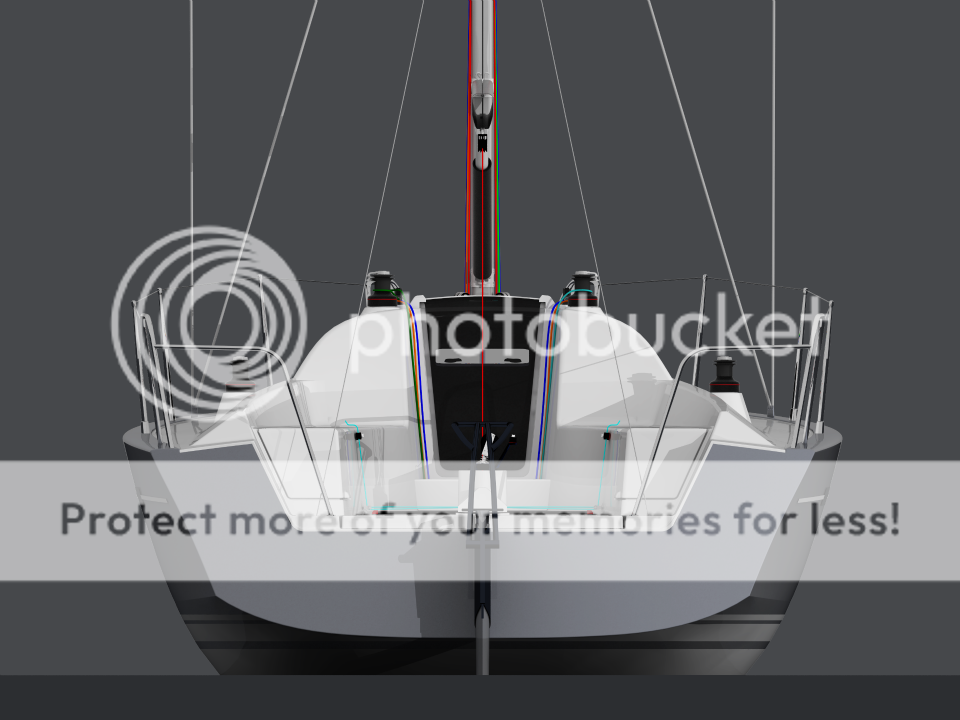
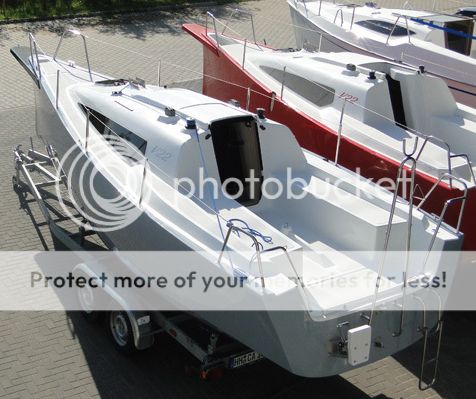
The two last images even if featuring boats with the same hull color are the first one from the 22S and the last one from the 30S. We can see that the difference in freeboard is particularly noticeable on the transom, that the 30S is a good looking boat and not one with a particularly high freeboard for a 30ft cruiser and that it feature sportive looks:

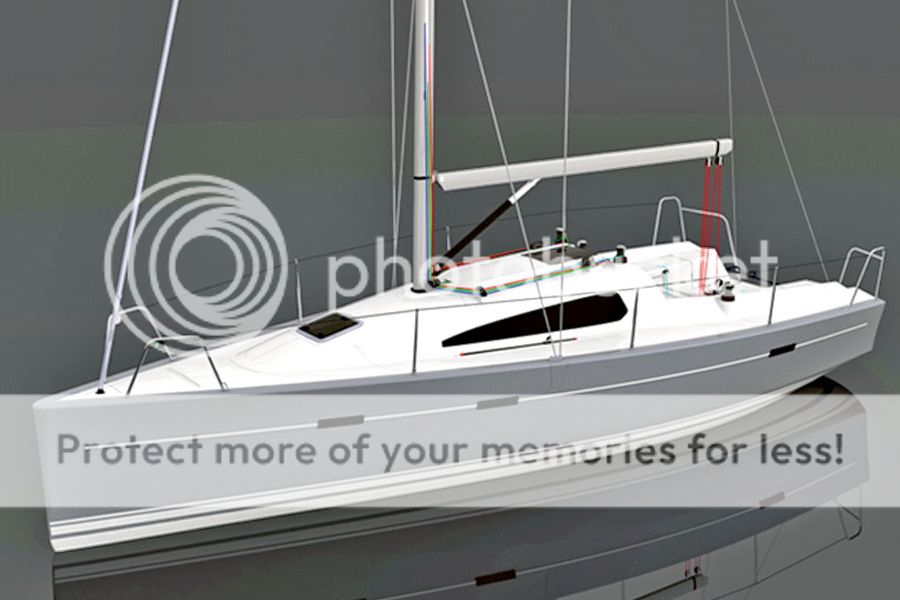
The Viko 22S still looks good if we consider the need of a big freeboard to allow a decent height in an interior of a 22ft boat but it is a mixed horse. It has some looks of a performance boat but the overall picture is spoiled by the obvious excessive freeboard. That is particularly true in a posterior view. On the last picture we have a 30S:


Even if the lesser freeboard of the 30s, with less windage and the weight of the crew lower on the cockpit, points to a more sportive boat, that is not the point where the two boats diverge radically, neither it is on the hull design but on the B/D ratio.
Both boats have similar keels with different options but to simplify lets look to the more sportive one, a similarly designed torpedo keel. The B/D ratio of the 22S is 21% while the one of the 30S is 31%. This huge difference is aggravated in what regards RM provided on the 22S by a smaller draft (1.50m to 1.65m). Normally smaller cruisers have a B/D ratio bigger than bigger ones not only as a precaution against the smaller overall stability but also because the weight of the crew and load can have a bigger impact on the overall stability (the 22S only weights 1200kg).
This is what really makes those two boats radically different and while the 30S joins to the considerable form stability to a considerable RM coming from the ballast, the 20S relies mostly on the form stability and that was very clearly stated on that Yacht.de boat test were not only they found that the sportive look of the boat did not corresponded to the sail performance as the boat had an insufficient final stability:

I don't understand why the shipyard had asked the designer for a cruiser with these characteristics and I don't understand also why Segio Lupoli could not convince them otherwise. He designed small boats for Comet, some with similar looks and high freeboard (Comet 26) but contrary to the 22S with an adequate stability and a much bigger B/D ratio for a similar type of keel and draft.
Yes, a boat with a small B/D ratio can be less expensive to build since the hull has not to support the forces generated by a bigger ballast, but the option that they took on this boat looks pretty ridiculous to me and on a second thought to them since they are already working on a 21S that probably is going to substitute this boat and perhaps will join the 31S on the line of more sportive boats, aiming for performance cruising that is clearly not what the 22S was intended for.
Bottom point, after having looked at the numbers and after having a good look at the boat in Dusseldorf I sustain that the 30S is an interesting boat at a very interesting price, a boat that almost for sure will have a good sailing performance. I count with Anders to see if my opinion meets the ones of the Yacht.de testers when they test the boat and that should not take a long time to happen.
Wednesday, March 12, 2014
CIRCUMNAVIGATING ON A 16 000 EUROS SAILBOAT
On the old thread we talked about the circumnavigation of Alexander and Florian on an old Mini 650 proto racer. The boat was really old and they had no money for a decent preparation so they have done what they could afford and set sail.
But who are these two guys?
Two 27 years old friends that had both working careers, one as chief of a construction team the other as director of a firm's commercial management, sailors of mostly sportive small cats with many miles in Raids, that decide to stop working for a while and spend their economies on a circumnavigation.
Just amazing that two young guys can have saved enough money in some few years of work for a circumnavigation. It takes to most many years of work just to have a sailboat. Well, not a sailboat like the ones they have :-) They are just showing that a circumnavigation can be made with the money both could have spent on brand new medium priced cars. Probably they had old cars but they are certainly enjoying life :-)
 We had leaved them on the Panama channel. After that they sailed the Pacific, broke the old mast, jury rigged and finally decided to stop to make a proper reparation on the boat. It costed them more 10 000 euros including another mast. They were helped by the solidarity of many sailors that contributed for that repair and also by their sponsors.
 Now with a brand "new" boat they are sailing on the Far East. Next destination: India

You can follow their adventures and voyage on the Facebook or on their own site:
https://www.facebook.com/pages/DEFI-Voile-650/141867589263604
http://ideesdumonde.org/
You can have a look at the old site were you have the first movies :
http://www.sailnet.com/forums/1010373-post3802.html
and most of all don't lose the last movies:
DEFI VOILE 6.50 from Ludovic Moulou on Vimeo.
But who are these two guys?
Two 27 years old friends that had both working careers, one as chief of a construction team the other as director of a firm's commercial management, sailors of mostly sportive small cats with many miles in Raids, that decide to stop working for a while and spend their economies on a circumnavigation.
Just amazing that two young guys can have saved enough money in some few years of work for a circumnavigation. It takes to most many years of work just to have a sailboat. Well, not a sailboat like the ones they have :-) They are just showing that a circumnavigation can be made with the money both could have spent on brand new medium priced cars. Probably they had old cars but they are certainly enjoying life :-)


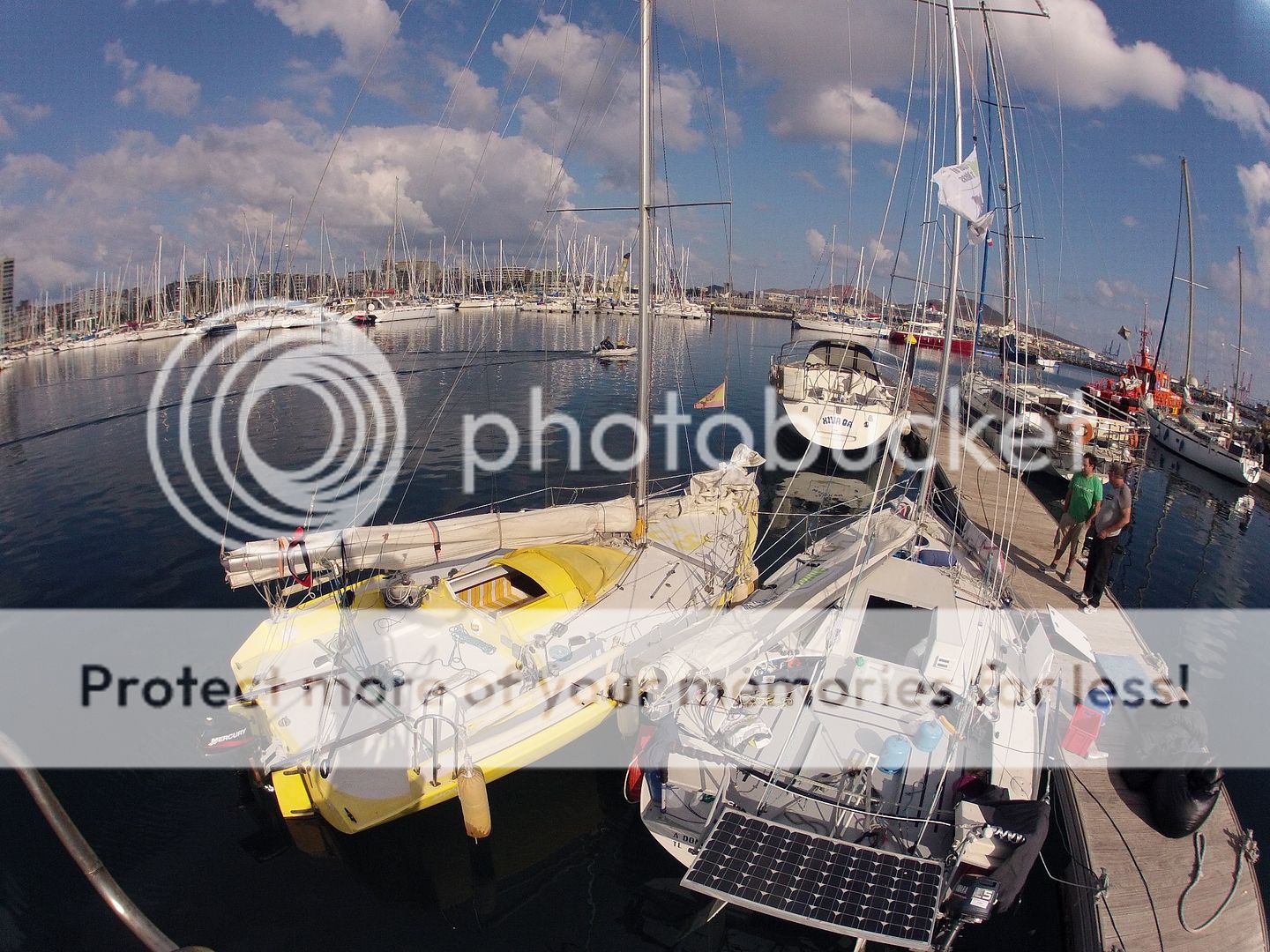
You can follow their adventures and voyage on the Facebook or on their own site:
https://www.facebook.com/pages/DEFI-Voile-650/141867589263604
http://ideesdumonde.org/
You can have a look at the old site were you have the first movies :
http://www.sailnet.com/forums/1010373-post3802.html
and most of all don't lose the last movies:
DEFI VOILE 6.50 from Ludovic Moulou on Vimeo.
Tuesday, March 11, 2014
HARALD SEDLACEK AND FIPOFIX:
He is sailing for so long that we forger that he is still there on that minuscule boat without autopilot on the middle of the Atlantic and I really mean on the middle of the Atlantic:
 He is sailing non stop for 54 days, most of them without autopilot, seated uncomfortably with the tiller on one hand and another holding to the boat. The bad luck did not end with the autopilot out of service: First we got nasty seas and opposing winds and when he thought that he was out of trouble with the trade winds pushing him quickly to America, he got few god sailing days and many without wind or opposing winds. If you look at the tracker you are going to see that there were days were he made as many miles as in 10 days and that the last have been painful, slow and upwind. Seems better now: http://www.open16.com/index.php/en/proof-of-principle/live-tracking
Probably he is half starved and on a small ration of water but even so can he make it last till the US? He is not even bound to the Caribbean but to US mainland, to St Augustine. I believe the only thing that keeps him going is dreaming with this boat:


Probably he is half starved and on a small ration of water but even so can he make it last till the US? He is not even bound to the Caribbean but to US mainland, to St Augustine. I believe the only thing that keeps him going is dreaming with this boat:
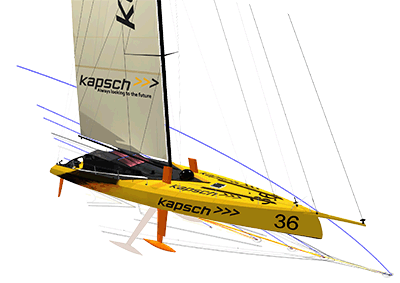
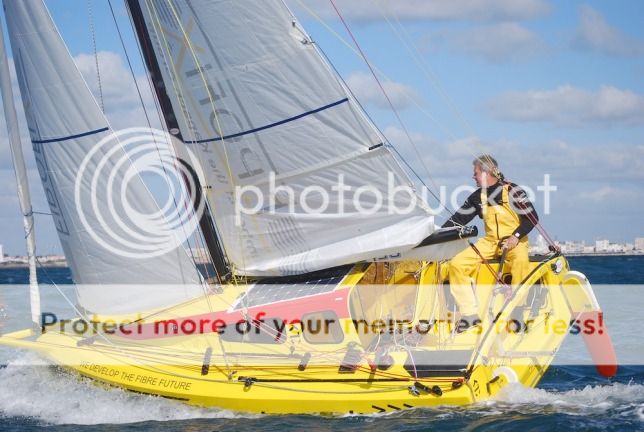
while he is sailing this one!!!! Probably he is going to take almost the same time on that Atlantic crossing as the sailors of the Vendee Globe take for a full circumnavigation...and he is one of them, having already made one Vendee. I hope that after all this misery (I heard that he was badly bruised by the salt and by being always seated on the same position) he can get that Open 60 for the next vendee. If not there is no justice in this world.
Let me remind you that the voyage to St. Augustine is only half of this project. After that he has to bring the boat back home:

MAT 10.10
This very fast Turkish cruiser racer (Mills design) was tested recently by yacht.de and they made an interesting movie while testing it:
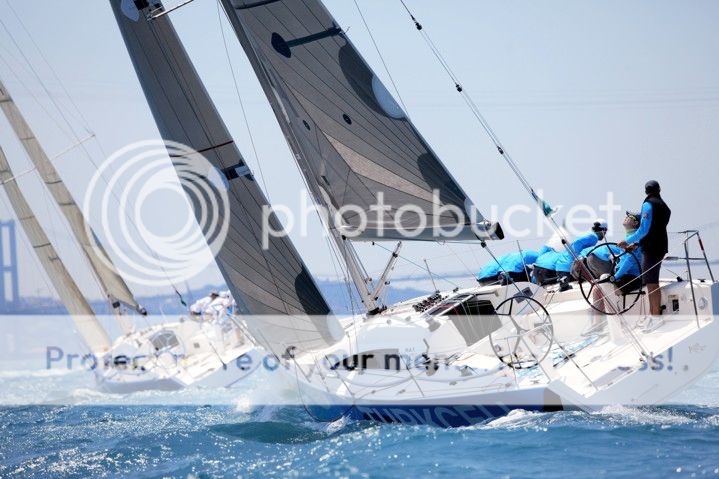
The IRC rating is very high, something like 1.039 while a bigger A35 has a smaller one (about 1.033) and a similar sized JPL1010 has 1.011 but the boat has been proved difficult to sail to its rating and have been slower than boats with smaller ratings (a note for our American friends: contrary to PHRF on almost all other rating systems a bigger number means a faster boat). Contrary to those two boats (A35 and JPK 10.10) it is a much more dificult boat to sail solo, a true regatta boat while the other two are designed in a more polyvalent way, being suited for solo racing and also more forgiving while cruising with a short crew.
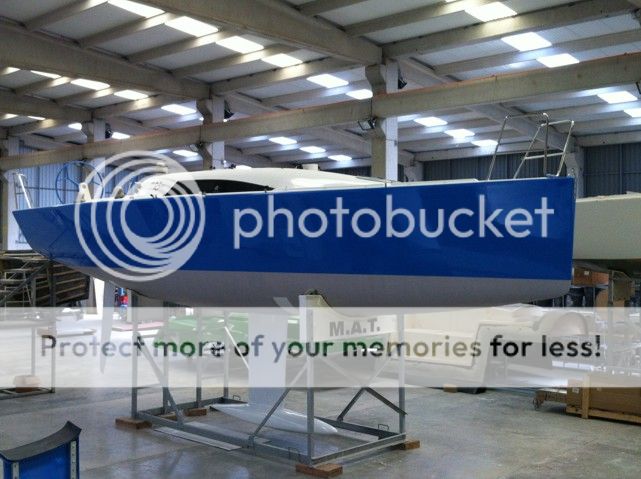 On the old thread we had already talked about this interesting boat that is sold at a nice price. It is even more interesting due to his different design philosophy compared to the JPK 10.10 ( the MAT is a bit narrower with a different transom and hull and a bigger B/D ratio) I mean, more interesting to us that will be following the performance comparison of these two boats on real time on this year's races. I believe the boats will be close on performance but on compensated time probably the Mat will not stand a chance.
Eric:
Looking at this video report I had the growing feeling this
is very much a Turkish Xp33... and this impression was confirmed at the end by
the testers themselves. This kind of quality and technology never comes cheap,
and so are the prices.

 Although I'm a tiller adept, if it's positioned very far aft as on both these
boats (logical from a racing point of view, freeing the cockpit for the crew),
the performance cruising advantage consisting of a more forward and sheltered
steering position (behind the sprayhood) is lost and so I understand the choice
for the twin wheels. Both the X and the M.A.T. seem very much more oriented
towards racing than (performance) cruising.
Although I'm a tiller adept, if it's positioned very far aft as on both these
boats (logical from a racing point of view, freeing the cockpit for the crew),
the performance cruising advantage consisting of a more forward and sheltered
steering position (behind the sprayhood) is lost and so I understand the choice
for the twin wheels. Both the X and the M.A.T. seem very much more oriented
towards racing than (performance) cruising.
I quite like the interior lay-out, although the Xp looks more cozy and better
finished (although I have not yet set a foot on either of the two boats). But
even from a cruising point of view, I don't like the forward and quite high
position of the water tank on the M.A.T.S. In racing mode it will of course be
empty, but when cruising I think it will have a significant impact on upwind
behavior in choppy conditions, especially with such a light hull. I don't
understand why they didn't fit it underneath one or even both of the cabin
seats/bunks.
 Hi Eric!
I agree with almost everything with you have said and I will add the the head of the Mat 10 10, just on the bow, should be very difficult to use on the sea, specially upwind with the boat pitching ;-).
 It seems to me that not only the Xp33 has a far better interior as it is much more pointed to a dual use while the X1010 is much more pointed to racing. Regarding being similar there are some differences regarding both boats and some similitude. Both boats will be very good upwind boats but the MAT 1010 is a much more powerful boat with a much bigger B/D ratio (0.501 to 0.395) boosted by a bigger draft (2.10m to 1.90m with a similar keel) . The X 1010 has also a bigger beam (3.32m to 3.21m). This superior power is translated on the IRC rating that is of about 1.039 on the MAT (a very big one for the size of the boat) and 1.023 for the Xp 33, a very good one too.
To take advantage of all that ballast the MAT 10.10 has a very different transom (and different hull) designed to go upwind with a lot of heel while the XP33 has a more forgiven hull (certainly easier to sail downwind) with a marked chine and is designed to sail upwind with less heel and to have that chine working on that position, increasing stability at the optimal angle (on the pictures the first one is always the MAT):
 These different characteristics will make the MAT 1010 not only a more difficult boat to sail (specially solo or with a short crew) but also a dart going upwind, specially with lots of wind where all that RM can be put at good service. That difference will it be even more marked if to that wind we join a nasty sea with waves.
 As negative points, sailing very fast the Mat 1010 downwind is for an expert crew. The boat has not "small wheels" on the side to help. I believe that a less expert crew or a cruiser will sail much more easily and probably faster, the XP downwind.
Monday, March 10, 2014
SOLAR PANELS ON SAILS
Finally somebody is working actively in what seems to be an obvious way to generate electric electricity on sailboats: Photo-voltaic sails. Till now the technology did not allow for panels flexible enough to allow that but on last years the technology has evolved a lot. It is already possible and it will not be expensive in the future. At least a sail manufacturer is working already actively on that, the UKsails France branch.
 They say about that :
"SolarClothSystem ® was developed to achieve the integration of a photovoltaic high efficiency film from the latest generation (14 %) in products for outdoor and water sports : mainsail , lazy bag , bimini, Sprayhood...
SolarClothSystem relies on the experience and technology of offshore Titanium sails, developed by the UK Sails of Mandelieu (France), for nearly ten years.
This new film is active with natural or artificial light directly or indirectly . It remains active on cloudy days as well as with low light . These characteristics are particularly suited to various situations encountered while navigating.
The thin PHV film ( 65 microns, DSSC type) is made in the USA . The integration is carried out in France in Mandelieu -La Napoule (patent pending) .
The cells are either integrated into the layers of a new sail membrane type or added on sails, new or used , gluing and sewing on woven materials, such as Dacron or Spectra . The flexible film allows the mainsail to be rolled on the boom .
The solar energy is transported by an integrated flexible circuit through the sail's luff and then to the foot of the mast . A small electronic controller is installed inside the boat to control the battery charging.
The photovoltaic mainsail aims to ensure energy independence while the boat is sailing . It will be enough for the consumption needs of a 40 foot boat equipped with : LED lights, fridge (well insulated), water pumps, conventional electronics (excluding Automatic pilot). The photovoltaic surface necessary in the Mediterranean use ( ref. Marseille ) will be approximately 3 m2 on the summer months (290 Watts / hour maximum period of strong sunlight ) and regarding the North of Europe ( ref. Hamburg) about 4 m2 for the same period."
http://www.uksailmakers.com/UK-Sailmakers-France-Mediterranean-/blog/Grand-Voile-Photovoltaique_7_358_29.html
That sounds like music to my ears and it is almost too good to be true, I hope they can manage a decent prize. It is not really necessary to use sails. If used on the top of a Bimini and a sprayhood those 3 m2 are easily reached (on a 40ft boat) and 290W an hour is just huge for non intrusive solar panels. With that plus the use of those panels on the sails the energy generated would be enough for all, including autopilot. With that my engine will start to rust :-) since I use it most to charge the batteries while cruising.
OPC - SOLAR PANELS ON SAILS
What would you do on the hook? just leave your sail flogging in the wind? I obviously like the ability to create more energy, but it doesn't solve the issue of when you're not sailing.
 They say about that :
"SolarClothSystem ® was developed to achieve the integration of a photovoltaic high efficiency film from the latest generation (14 %) in products for outdoor and water sports : mainsail , lazy bag , bimini, Sprayhood...
SolarClothSystem relies on the experience and technology of offshore Titanium sails, developed by the UK Sails of Mandelieu (France), for nearly ten years.
This new film is active with natural or artificial light directly or indirectly . It remains active on cloudy days as well as with low light . These characteristics are particularly suited to various situations encountered while navigating.
The thin PHV film ( 65 microns, DSSC type) is made in the USA . The integration is carried out in France in Mandelieu -La Napoule (patent pending) .
The cells are either integrated into the layers of a new sail membrane type or added on sails, new or used , gluing and sewing on woven materials, such as Dacron or Spectra . The flexible film allows the mainsail to be rolled on the boom .
The solar energy is transported by an integrated flexible circuit through the sail's luff and then to the foot of the mast . A small electronic controller is installed inside the boat to control the battery charging.
The photovoltaic mainsail aims to ensure energy independence while the boat is sailing . It will be enough for the consumption needs of a 40 foot boat equipped with : LED lights, fridge (well insulated), water pumps, conventional electronics (excluding Automatic pilot). The photovoltaic surface necessary in the Mediterranean use ( ref. Marseille ) will be approximately 3 m2 on the summer months (290 Watts / hour maximum period of strong sunlight ) and regarding the North of Europe ( ref. Hamburg) about 4 m2 for the same period."
http://www.uksailmakers.com/UK-Sailmakers-France-Mediterranean-/blog/Grand-Voile-Photovoltaique_7_358_29.html
That sounds like music to my ears and it is almost too good to be true, I hope they can manage a decent prize. It is not really necessary to use sails. If used on the top of a Bimini and a sprayhood those 3 m2 are easily reached (on a 40ft boat) and 290W an hour is just huge for non intrusive solar panels. With that plus the use of those panels on the sails the energy generated would be enough for all, including autopilot. With that my engine will start to rust :-) since I use it most to charge the batteries while cruising.
OPC - SOLAR PANELS ON SAILS
What would you do on the hook? just leave your sail flogging in the wind? I obviously like the ability to create more energy, but it doesn't solve the issue of when you're not sailing.
Hi OPC! That was not only about panels on the sails. On the article it was mentioned the possibility of using that on the top of the Bimini, Sprayhood and lazy bag. Only that area on a 40ft boat would have the 3 m2 (290 W/hour) that they consider enough for the needs of a 40ft sailboat (except autopilot). On anchorage the needs will be smaller (no navigation lights).
But really the most interesting future of this technology is to be able to make sails and tissues entirely photovoltaic even if with a lesser efficiency than the announced 14%. Even with an efficiency 3 times smaller the 110sqm of my sails would produce something like 3200W/hour. Some hours of sailing each day while cruising would be enough to have the batteries fully charged, assuming you are using AGM batteries able to store all that load in a short time.
MrPelicano - SOFT SOL. PANEL / PHOTOVOLTAIC CLOTH
Typically, flexible or "soft" solar panels are often placed on top of the sprayhood on many cruising boats, as well as on the coachroof and bimini - i.e., wherever there is a flat surface where such panels may be placed (Mini 6.5's do this, for example). These soft panels are supplemented by more conventional "solid" or "rigid" panels mounted on the transom in one form or another.
The primary beneficiaries of incorporating photovoltaic cells into the sails themselves would be racing boats which have their sails up for very extended periods - e.g., ocean racers like the IMOCA 60s, VOR 65s, Mini 6.5s, Classe 40s, etc. The benefits are significant when you factor in reduced weight from carrying less fuel, reduced windage from fixed aft-mounted panels and windvanes, reduced drag from hydrogenerators, etc. Imagine, for example, photovoltaics in the massive mainsail and gennaker of an IMOCA 60 or MOD 70 - that's a lot of potential power generation. If sailmakers are able to implement the technology while preserving the performance characteristics and longevity of the sails, it will be a tremendous improvement. Looking forward to seeing how this evolves.
Hi Pelicano!I know about soft solar panels. I even have one on my boat :-) But their "softness" is relative. They are flexible but it is not about that we are talking about but about a fabric, an integrated "cloth" that has photo-voltaic properties, not something you put over a bimini or a sprayhood, but the Sprayhood or the bimini itself made out of photovoltaic cloth. If you can do that for sail cloth you can do it for any cloth. We are talking about this: http://www.treehugger.com/solar-technology/silicon-based-fibers-could-make-fabric-solar-cells.html and it seems it is already a reality.
Yes, probably that is going to be used first on long distance racers, or maybe not depending on how much will affect the sail in its sail performances. Even a very small loss can be critical for a racing boat but irrelevant for a cruising boat.
I sail about 6 hours a day while cruising and I cruise in the summer so I believe that sails woven with solar cells could produce enough energy to full charge the batteries. The smaller surfaces on the Bimini, Sprayhood and lazybag would be enough to maintain them with enough charge for the periods on anchorage. It seems perfect to me. I too look forward to see how this turn out, or better, when It will turn out:-) I hope I will still be around ;-)
MrPelicano - SOFT SOL. PANEL / PHOTOVOLTAIC CLOTH
Typically, flexible or "soft" solar panels are often placed on top of the sprayhood on many cruising boats, as well as on the coachroof and bimini - i.e., wherever there is a flat surface where such panels may be placed (Mini 6.5's do this, for example). These soft panels are supplemented by more conventional "solid" or "rigid" panels mounted on the transom in one form or another.
The primary beneficiaries of incorporating photovoltaic cells into the sails themselves would be racing boats which have their sails up for very extended periods - e.g., ocean racers like the IMOCA 60s, VOR 65s, Mini 6.5s, Classe 40s, etc. The benefits are significant when you factor in reduced weight from carrying less fuel, reduced windage from fixed aft-mounted panels and windvanes, reduced drag from hydrogenerators, etc. Imagine, for example, photovoltaics in the massive mainsail and gennaker of an IMOCA 60 or MOD 70 - that's a lot of potential power generation. If sailmakers are able to implement the technology while preserving the performance characteristics and longevity of the sails, it will be a tremendous improvement. Looking forward to seeing how this evolves.
Hi Pelicano!I know about soft solar panels. I even have one on my boat :-) But their "softness" is relative. They are flexible but it is not about that we are talking about but about a fabric, an integrated "cloth" that has photo-voltaic properties, not something you put over a bimini or a sprayhood, but the Sprayhood or the bimini itself made out of photovoltaic cloth. If you can do that for sail cloth you can do it for any cloth. We are talking about this: http://www.treehugger.com/solar-technology/silicon-based-fibers-could-make-fabric-solar-cells.html and it seems it is already a reality.
Yes, probably that is going to be used first on long distance racers, or maybe not depending on how much will affect the sail in its sail performances. Even a very small loss can be critical for a racing boat but irrelevant for a cruising boat.
You see it on a racing boat, me that I am a long range cruiser, in a sense I cruise non stop for 3 or 4 months, cannot wait to have that stuff in my boat. I sail a lot and I use mostly the engine to charge the batteries. Not needing to use the engine would not only save a lot of diesel as it would make it last longer, need less maintenance, give me a more peaceful time and most of all, increase the boat autonomy. The engine is good to charge the batteries to 85% but AGM batteries need to be charged at 100% from time to time.
I sail about 6 hours a day while cruising and I cruise in the summer so I believe that sails woven with solar cells could produce enough energy to full charge the batteries. The smaller surfaces on the Bimini, Sprayhood and lazybag would be enough to maintain them with enough charge for the periods on anchorage. It seems perfect to me. I too look forward to see how this turn out, or better, when It will turn out:-) I hope I will still be around ;-)
Mr Pelicano - PHOTOVOLTAIC CLOTH
Paulo - Yes, that was how I understood it - i.e., photovoltaics incorporated into the sail cloth itself. However, I probably did not express the distinction clearly, in my transition from "soft" or "flexible" solar panels and the new direction detailed in the link you provided. Indeed, if you think about it, once the capability exists to incorporate photovoltaics into cloth, there is literally nothing that might not be put to service generating power - e.g., cockpit cushions, sunbathing towels (on the foredeck or aft swimming platform). Even in foul weather gear - consider how much time a singlehanded skipper may spend in the cockpit of his/her Mini 6.5 :)
All exaggeration aside, this is a major technological breakthrough in many ways, and should contribute significantly to making sailing an even "greener" activity (not to mention making moorings much quieter - less diesel generator / windvane noise).
Well....I agree!!! :-)
NAUTIC 370

A year ago I had talked about this Hungarian all carbon performance cruiser on the old thread : http://www.sailnet.com/forums/1042878-post4276.html and manifested my surprise for finding this very good design with already some years, by Andrej Justin, somewhat hidden on the Balaton waters.
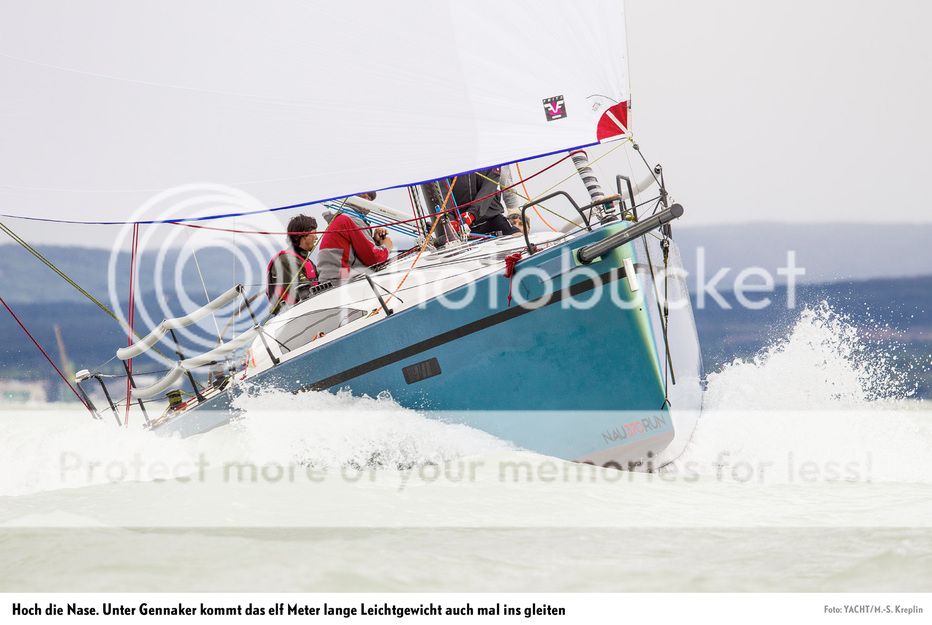
The boat did not only looked sharp as it had some very interesting characteristics, starting with the weight (about 4000kg) passing by the overall design and building methods (carbon epoxy sandwich with airex PVC foam core).
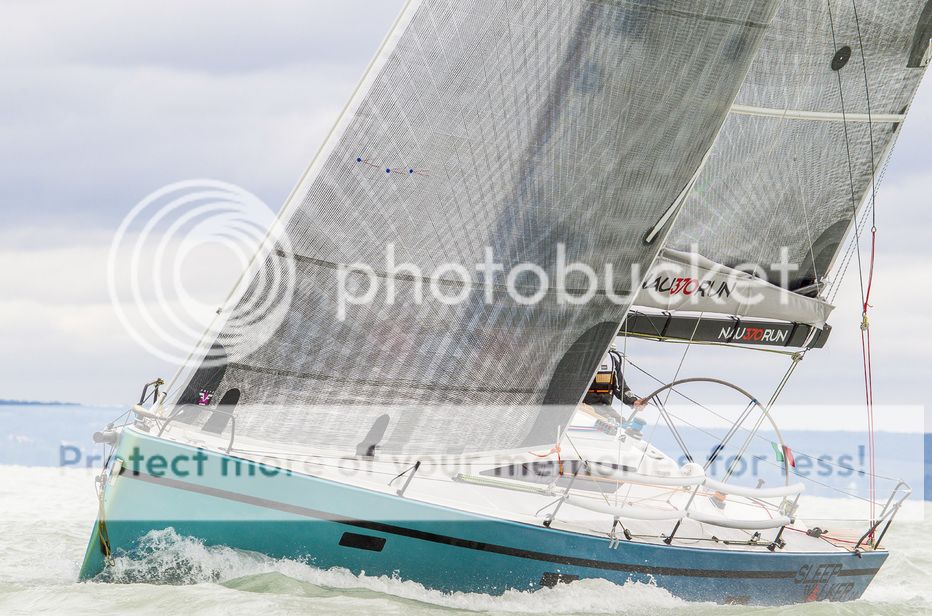 Well, it will not be hidden anymore: The Germans of Yacht.de found it and tested it. They were as astounding as I were with this boat and for what I can see they loved it. The full test will come out on the next edition of the magazine. Anders can you tell us something more when you read the test?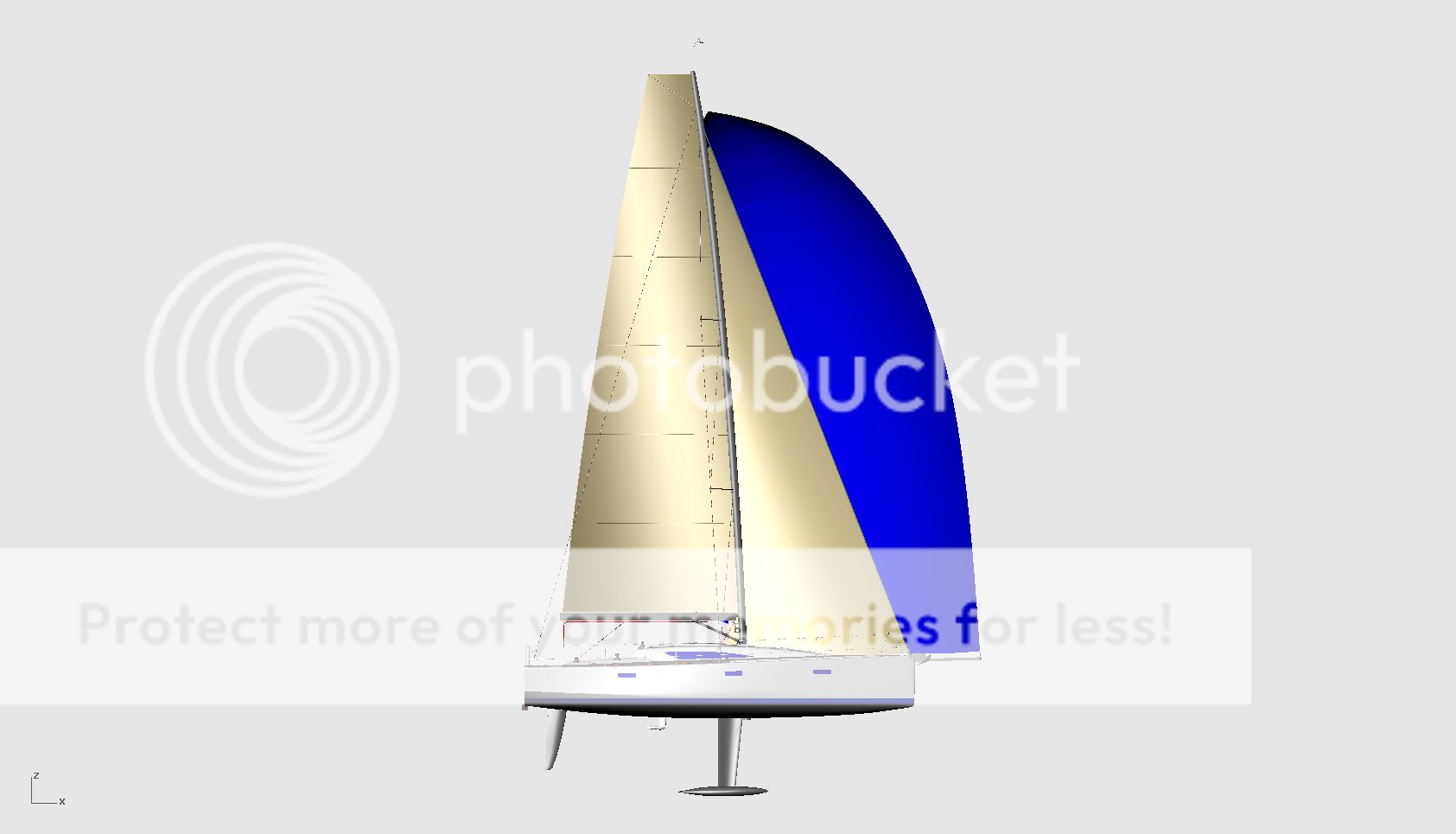
By now we can see that the interior is a lot better than the previous one that the boat tested features a lifting keel and that the hull is rather narrow (3.46m) on the lines of some Italian boats but with the beam all pulled back and a transom VOR 70 type. The boat can come with a big single wheel or with a very nice tiller setup that I prefer. I like it a lot :-).........................(photos by Yacht.de)

Anders:
On the Nautic 370 Yacht.de magazine boat test, in general they are positive, especially with the quality and low weight of the carbon version. The boat can also be ordered with normal laminate and then the boat will be approximately 700 kg heavier. They also liked the customization approach, only possible on a small yard, the single wheel and the direct steering.
 The Nautic needed reefing at 15 knots and reached a top speed of 16 knots with gennaker (wind 4-6 Beaufort) but it was in a rather racy mode and the boat was not loaded. They did not like the rather high price of the carbon version. They did not have a price for the non carbon version.
http://www.yacht.de/multimedia/galerie/federgewicht-vom-plattensee/a86981.html
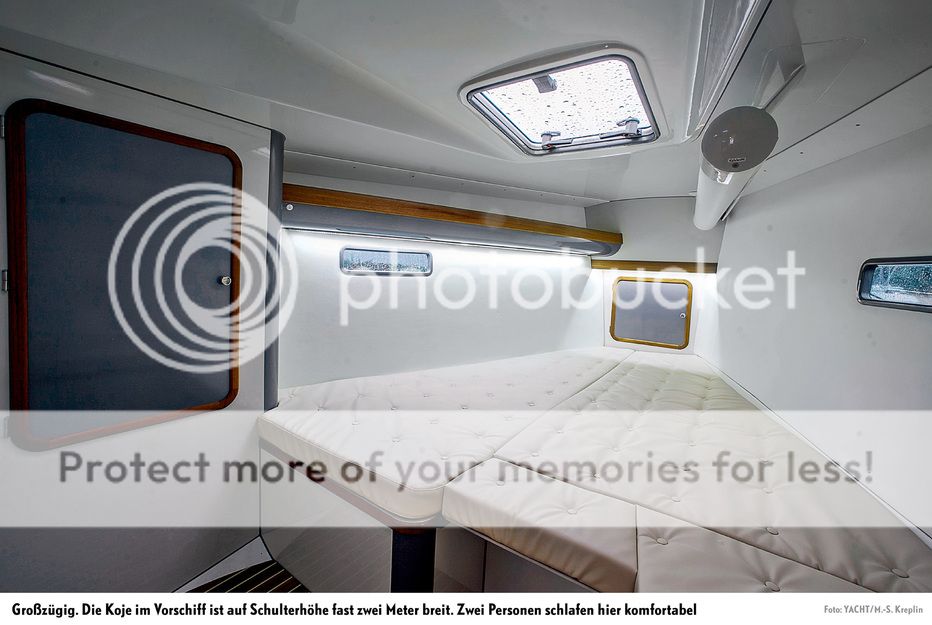 The Nautic needed reefing at 15 knots and reached a top speed of 16 knots with gennaker (wind 4-6 Beaufort) but it was in a rather racy mode and the boat was not loaded. They did not like the rather high price of the carbon version. They did not have a price for the non carbon version.
http://www.yacht.de/multimedia/galerie/federgewicht-vom-plattensee/a86981.html

Thanks Anders! It seems that fast boats, specially carbon ones, are expensive even if made in Hungary. Boats made in small shipyards with high quality are expensive even if the labor is not very expensive. We had one made in Portugal; it ended up so expensive that I never managed to know how much it really had cost.
Subscribe to:
Posts (Atom)